As an Amazon Associate, we earn from qualifying purchases. Some links on this site are affiliate links at no extra cost to you. Our recommendations are based on thorough research and editorial judgment.

Data Line Protection: What Does It Mean?

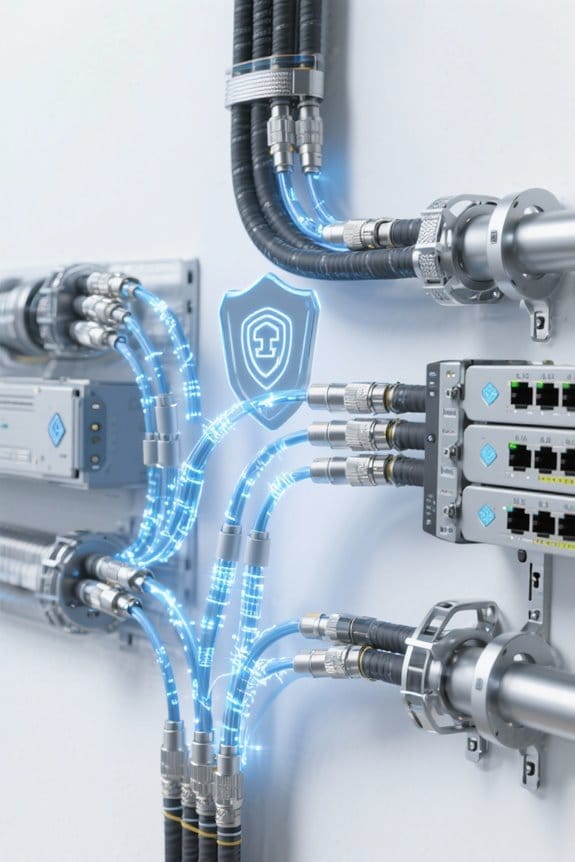
Data line protection prevents voltage spikes and EMI from damaging equipment on Ethernet, coax, DSL, or serial lines. It uses TVS diodes, MOVs, or three‑stage protectors rated to 10 kA and compliant with UL 497B and IEC 61643‑21. Devices mount within 10 cm of the port, use short leads, and connect to solid earth with under 5 ohm ground. Inspect protectors yearly, replace degraded MOVs, and you can follow manufacturer surge counts to learn more.
Key Takeaways
- Data line protection prevents voltage spikes and EMI from damaging equipment by diverting or clamping harmful transient energy on communication cables.
- Surges from lightning, utility switching, and EMI can enter via Ethernet, coax, or DSL and exceed thousands of amps/volts without protection.
- Protection devices include TVS diodes, MOVs, and multi-stage surge protectors; higher joule ratings handle larger or repeated surges.
- Install protectors within 10 cm of ports, use short leads, and connect to a low-impedance earth ground with appropriate conductor gauge.
- Regularly inspect and replace protectors, comply with standards (UL 497B, IEC 61643-21), and match devices to cable type and interface.
Why Data Line Protection Matters
You may be interested
Because lightning and EMI can produce surges exceeding 10 kA and 1.2/50 µs impulse energy, data lines require protection. Surge protection and data line protection prevent damage to switches, routers, and servers from lightning strikes and transient EMI events. Install surge suppressors rated for 10 kA, SPD-3S-10kA, and confirm UL 497B and IEC 61643-21 compliance. For proper grounding, run a 6 mm2 copper conductor to main earth, keep loop under 0.5 m. Use three-stage devices with gas discharge tubes, TVS diodes, and series impedance to handle 1.2/50 µs impulses reliably. Step 1: isolate the line; Step 2: fit suppressor at entry; Step 3: test continuity and clamping at 1 kV. Maintenance and records reduce downtime that can cost millions per hour, keeping electronic equipment operational. Consider selecting protectors that include gas discharge tubes and diagnostic LED indicators to ensure clear status monitoring and faster fault detection.
Common Surge Sources and Threats to Data Lines
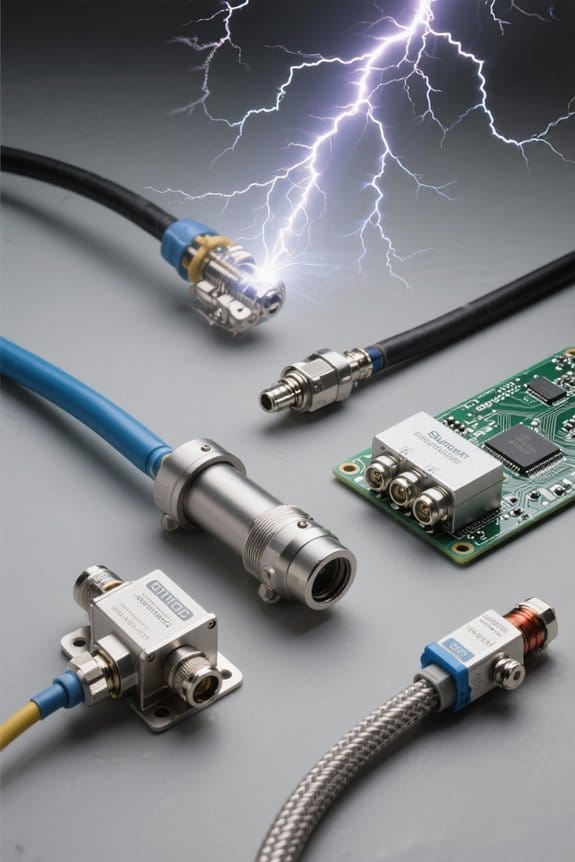
Many common surge sources threaten data lines, and technicians can expect lightning peaks up to 20 kV and 1.2/50 µs impulses. Common surge sources include lightning strikes, utility switching, and EMI that create electrical spikes on Ethernet, coaxial, and DSL. Surges travel along cabling and enter sensitive equipment such as routers, switches, and transceivers causing failures. One strike can compromise a network node and cause long downtime without surge protection. Inspect cable routes, document cable types, and install inline protectors with model codes like SPD-ETH-01 or SPD-COAX-02. Step 1: isolate affected segment. Step 2: ground shield per ANSI/TIA-607-C. Step 3: mount SPD within 1 m of equipment. Test continuity after installation and record voltage clamp levels and test dates. Keep records for five years. Ensure surge protectors with a surge protection rating of at least 3000 joules are used when protecting critical network equipment.
Recommended Products

PROTECTION EQUIPMENT - The Network Surge Protector Suppressors protects against network surges.Insert a Network Surge Protector in your network cables, to prevent network surging.This is a good insurance policy for your expensive router and outdoor POE antenna.

Ethernet Surge Protector for Gigabit GbE PoE/High PoE++ (HPoE) 1000 Mbps LAN Ethernet Network

The Network Surge Protector Suppressors protects a single data line, including computer network signals, communication equipments and more. Insert a Network Surge Protector in your data cables, and connect them to the ground, to prevent lightning surging, so as not to damage your devices, you will not waste your money.
Types of Surge Protection Devices for Data Transmission
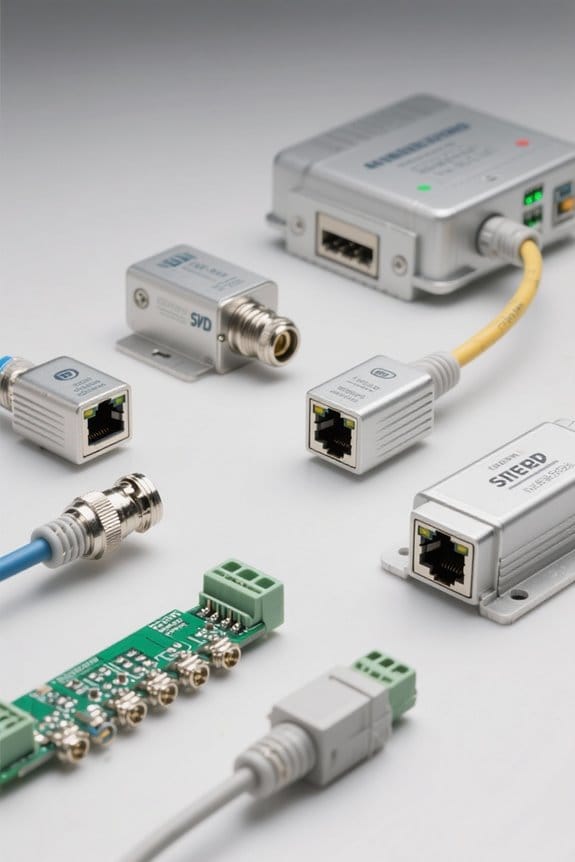
When selecting surge protection for data transmission, technicians should match device topology to the interface, cable, and voltage requirements. Single stage devices, such as TVS diodes (example TVS-5KE6.8A) and MOVs, provide basic Data Line Surge protection without failure indicators. Three stage surge protectors use a gas discharge tube, series impedance, and TVS to handle large surges and self-protect. Install protectors at the connection point with a low impedance connection and a solid ground within 0.5 meters of the device. Protectors are made for RJ-45, RJ-11, and RS-232 connectors, often labeled P/N DLSP-RJ45-01. Choose voltage-rated units, 5-7V for RS-422/485 and 12-15V for RS-232, to maintain protection regarding signal integrity. Test installed protectors monthly with a 1 kV surge simulator per manufacturer instructions to verify operation. For installations involving powered devices, ensure PoE compatibility with IEEE 802.3af/at/bt standards and appropriate wattage ratings to protect PoE-equipped equipment.
Recommended Products
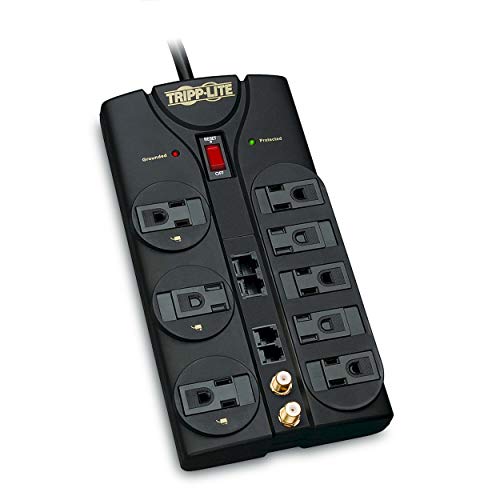
Robust Audio/Video AC surge suppressor to protect your home theater system or other valuable electronics from a voltage spike and more

Ethernet Surge Protection

(2 Pack) Ethernet Surge Protector for Gigabit GbE PoE/High PoE++ (HPoE) 1000 Mbps LAN Ethernet Network
Choosing Protectors for RS-232, RS-422/485, and Ethernet
Technicians choosing protectors for RS-232, RS-422/485, and Ethernet must match clamping voltage, connector type, and ground placement precisely. For RS-232, select surge protection devices with 12-15V clamping, model SDP-232A, and mount within 0.5 meters of the port. For RS-422/485, choose suppressors rated 5-7V, model SDP-485B, and keep lead length under 0.3 meters to retain signal integrity. For Ethernet, use RJ-45 compatible protectors with low insertion loss, model ETH-TP1, and verify less than 0.5 dB loss. Prefer three-stage surge protection devices with gas tubes, series impedance, and TVS parts to withstand power surges. Ascertain a good ground connection; you can use 10 AWG heavy gauge wire to reduce voltage drop. Label each protector, test continuity, record serial numbers, and log installation date and test results completed. Additionally, employing three-stage surge protection designs that combine gas discharge tubes, series impedance, and TVS components improves overall surge-handling capability and reduces the likelihood of equipment damage.
Recommended Products
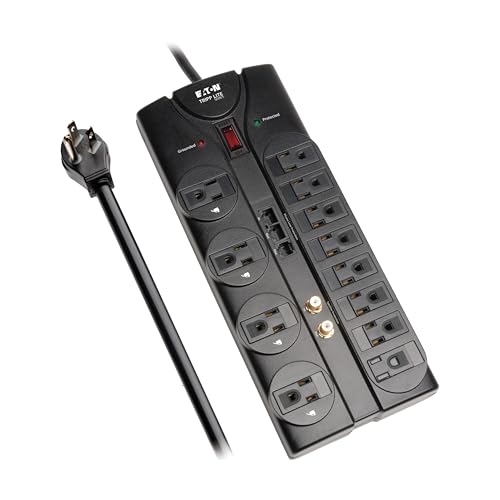
HOME THEATER SURGE PROTECTOR FOR TV: Features 12 outlets, 2880 joule rating, and an 8ft extension cord with flat plug. Four outlets fit bulky plugs without blocking others. Package includes 6ft phone line (RJ11), Ethernet (RJ45), and Coax cables.

Aluminum Case, Ethernet Surge Protector Protects Computer Networking Equipment Devices like Router, Modem, Camera, Switch etc

【Surge Protection】:Ethernet surge protector is designed to protect equipment against transients from lightning, ESD, and ground surges. Awishwell surge protector supports speeds up to 1 Gigabit -1000 Mbps, and provides PoE++ 802.3af/at/bt compatibility with 10KV surge protection, without affecting network performance. Peak surge current protection up to standard 20KA 8/20μs.
Installation Practices and Grounding Requirements
After selecting protectors SDP-232A, SDP-485B, and ETH-TP1, installers must follow specific installation and grounding requirements. Install surge protection devices as close to the protected data port as possible, within 10 cm. Use short leads and mounting to reduce inductance. Provide a low impedance ground connection to a solid earth ground. For ground runs under 3 m use 14 AWG; for runs 3–10 m use 10 AWG; over 10 m use 6 AWG. Bond the protector ground to the host chassis with <5 cm strap where possible. Verify chassis and building earth ground share the same potential to avoid loops. For additional protection, cascade devices with manufacturer guidance. You can label all ground points and keep documentation for inspection. Follow documented installation practices and procedures. Consider using corrosion- and abrasion-resistant materials such as No.65 manganese steel in nearby enclosures to enhance long-term reliability.
Recommended Products

FAST USB 2.0 ISOLATOR: Delivers true High-Speed 480Mbps usb data transfers unlike competitors limited to 12Mbps. Our audio hum eliminator ensures noise-free, high-fidelity audio for professional studios or sensitive audio systems, and DAW connections.

🛡️ PROTECTS single port-to-port RJ45 Modem, Router, Switch, Patch Panel, Security Camera, CCTV, VoIP, WiFi Access Point, Computer, Gaming Console, NAS drive, TV, AV connections. 1 nanosecond surge detection time.

TAA-COMPLIANT 1G NETWORK ISOLATOR: Protects connected devices by providing 4kV galvanic isolation between Ethernet connections, separating all conductive paths; Essential for preventing ground loops in audio, video, and data networking setups
Testing Standards, Certification, and Performance Metrics
Because surge protectors must meet defined test criteria, installers should verify certification and performance before final connection. Testing standards such as IEEE and IEC use the 1.2/50ms – 8/20ms combination wave for surge immunity testing. Surge protection devices for data lines should carry IEC 61643-21 and UL 497B certification before installation. Performance metrics include clamping voltage ratings, response time, and declared surge immunity in volts and kilo-volts. Typical clamping voltage ratings are 5-7V for RS-422/RS-485 and 12-15V for RS-232 interfaces during testing. Devices must be tested across 1-6 kV ranges and validated to withstand peak surges up to 20 kV from lightning. Installers can request manufacturers’ test reports, waveform plots, and measured clamping values, then record these performance metrics and certification codes for records. Also consider using acid-free materials to prevent long-term degradation of protective components.
Recommended Products

Multi-machine Communication: Supports up to 128 nodes in one network with 3937 feet maximum transmission distance enabling large-scale industrial deployment across factory floors or warehouse zones

Bidirectional RS232 to RS485 RS422 converter converts RS-232 signals to RS-485 or RS-422 signal, cable can be connected to either a terminal block or an RJ45 network port

Universally connects to any manufacturer's load center (breaker box)
Maintenance, Failure Modes, and Replacement Strategies
Having verified IEC 61643-21 and UL 497B certification, the maintenance program must include scheduled inspections and documented replacement plans. Technicians inspect surge protection devices every 12 months, verify grounding systems resistance below 5 ohms, and record results. Measure lead lengths to 0.5 meters, check connectors per product code SPD-24V-RJ45, tighten to exactly 0.5 N·m. Common failure modes include MOV degradation, TVS drift, and thermal faults from repeated surge events, reducing protection efficacy. You can enable performance monitoring to log surge count, peak current amperes, and time stamps for daily trend analysis. Replacement strategies follow guidance; replace SPD units every 3-5 years, or sooner if diagnostics indicate imminent failure. Record serial numbers, replacement date, installer initials, and retain proof electronically for audits and warranty claims. For high-performance systems in lightning-prone areas, prioritize surge protectors rated at 3000+ joules to ensure enhanced energy absorption and protection.
Frequently Asked Questions
What Is Data Line Protection?
Data line protection safeguards network connections and equipment from voltage transients, preserving data integrity and electrical safety through surge suppression, power management, and data loss prevention measures, benefiting from ongoing technological advancements and remote diagnostics.
What Does Data Protection Mean?
Data protection means safeguarding information; like a library saved by sandbags after a flood, it encompasses data security strategies, personal data management, regulatory compliance overview, encryption technology benefits, data breach consequences, and privacy protection measures.
What Is Meant by Data Line?
A data line is a physical or logical channel that carries data transmission between devices, supporting data integrity, enabling data access, and contributing to data security, data backup strategies, and enforcement of data privacy controls.
Do I Really Need a Surge Protector for My Computer?
Yes — despite seeming unnecessary, one should use a surge protector; it guards against power surges, preserves equipment lifespan, boosts electrical safety and computer performance, and choosing surge protector types offers clear cost effectiveness overall reliability.