As an Amazon Associate, we earn from qualifying purchases. Some links on this site are affiliate links at no extra cost to you. Our recommendations are based on thorough research and editorial judgment.

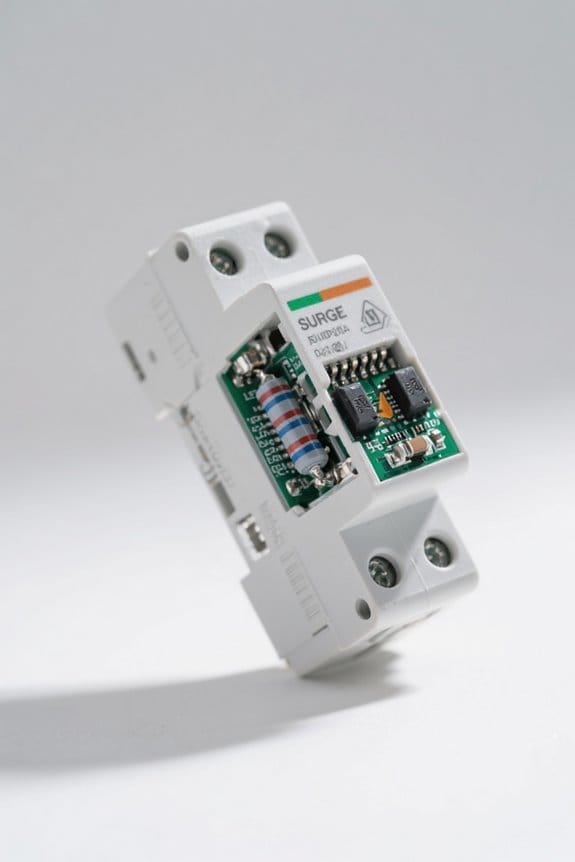
Explaining Low Let-Through Rating on Surge Protectors

A low let-through rating means little surge voltage reaches equipment, typically about 330 V measured per UL 1449 with a 6 kV/3 kA waveform. It tells installers that MOVs clamp near 330 V and respond within nanoseconds. You can compare joules (aim for ~1,000 J) and surge current (e.g., 20 kA) on labels. Install SPDs within 20 meters of protected gear, near the main panel within 0.5m, inspect every 12 months. More tests follow below.
Key Takeaways
- Low let-through voltage is the maximum residual voltage reaching equipment during a surge; lower values mean better protection.
- UL 1449 6 kV/3 kA standard measures let-through using a combination waveform to compare SPDs consistently.
- For 120V systems, a let-through near 330V is ideal, with 330–600V considered strong protection for sensitive electronics.
- MOV-based SPDs clamp surges in nanoseconds; look for high joule ratings (≥1,000 J) and adequate surge current capacity.
- Also consider differential and common-mode let-through, proper SPD placement near panels, and annual inspections for reliable performance.
What a Low Let-Through Rating Means for Your Equipment
You may be interested
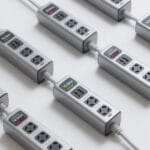
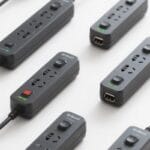
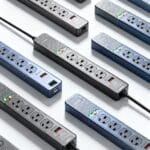
A low let-through rating describes the maximum voltage that reaches electronics during a surge, measured in volts under UL 1449. A Surge Protection Device labeled SPD-330UL with 330V let-through limits voltage on 120V systems, protecting connected equipment for home and office equipment. Low let-through values range 330V to 600V, lower numbers reflect superior protection for sensitive electronics. Guidelines recommend 330V for critical devices; 600V is acceptable only when higher clamping is required. Installation steps advise verify UL 1449 marking, confirm model code, mount near panel, torque connections to spec. Routine checks include inspect indicator lights monthly, record datasheet let-through values for SPD-330UL, replace after major surges. Choosing a low let-through rating yields reliable protection, extends device lifespan, and reduces operational disruptions for connected equipment. Many professionals also rely on tan gaffer tape for cable management and labeling.
How Let-Through Voltage Is Measured and Reported
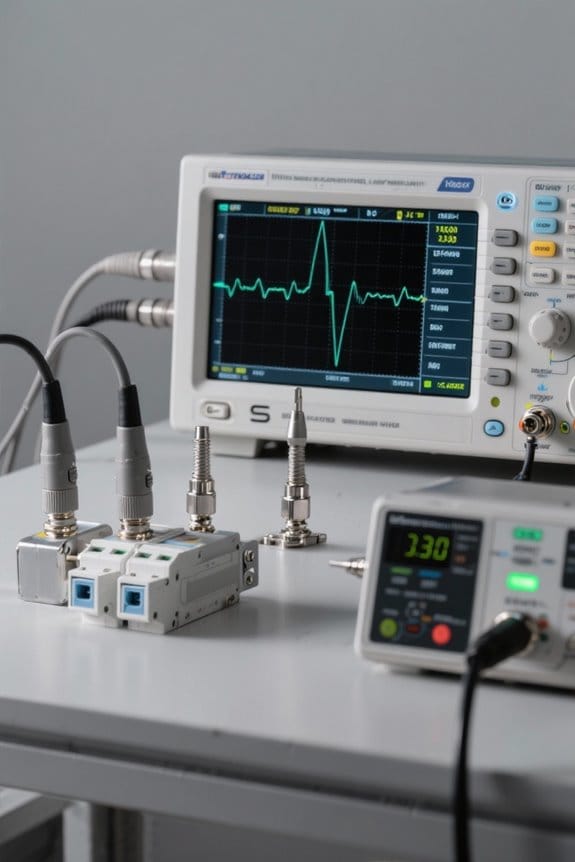
Several certified labs measure let-through voltage using a standard 6 kV, 3 kA combination waveform defined in UL 1449. Testers apply the wave to surge protectors mounted on rack, then record the peak residual voltage across output terminals. Step 1: apply 6 kV, 3 kA waveform; Step 2: divert current to ground; Step 3: measure residual voltage in volts. Measurements report ratings such as 330V or 400V per UL 1449, letting consumers compare protective devices. A lower let-through voltage denotes better protection for connected equipment during voltage surges and surge events. You can read lab reports that list wave shape, clamp value, test points, and product code for traceability. Manufacturers publish the specific rating and pass/fail status per UL 1449 standard documentation for devices. Choosing acid-free low-residue materials is important in related preservation contexts to minimize damage during application and removal.
Differential Mode Vs Common Mode Let-Through Explained
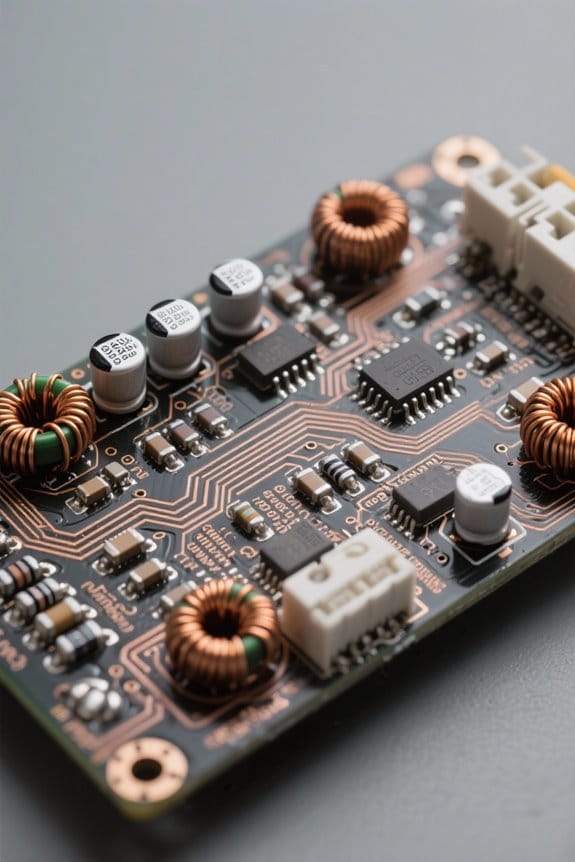
When comparing let-through types, users should separate differential and common mode paths before testing with standard waveforms. Differential mode let-through voltage appears across line and neutral and is measured against a 1000V threshold in many standards such as IEC 61643. Common mode let-through voltage appears between either conductor and ground and should typically remain at or below 1500V for good protection. Technicians inspect surge protectors using SPDs with codes like SPD-DM1000 and SPD-CM1500 in step-by-step testing protocols during commissioning tests. First, isolate differential and common mode paths, then apply a defined waveform, and record let-through voltage values precisely in volts and milliseconds. These measurements help determine protective capability and guide selection of surge protective devices matched to equipment sensitivity and site grounding. Technicians and consumers should prioritize higher joule ratings when matching surge protectors to high-value equipment.
Role of MOVs, Clamping Voltage and Response Time
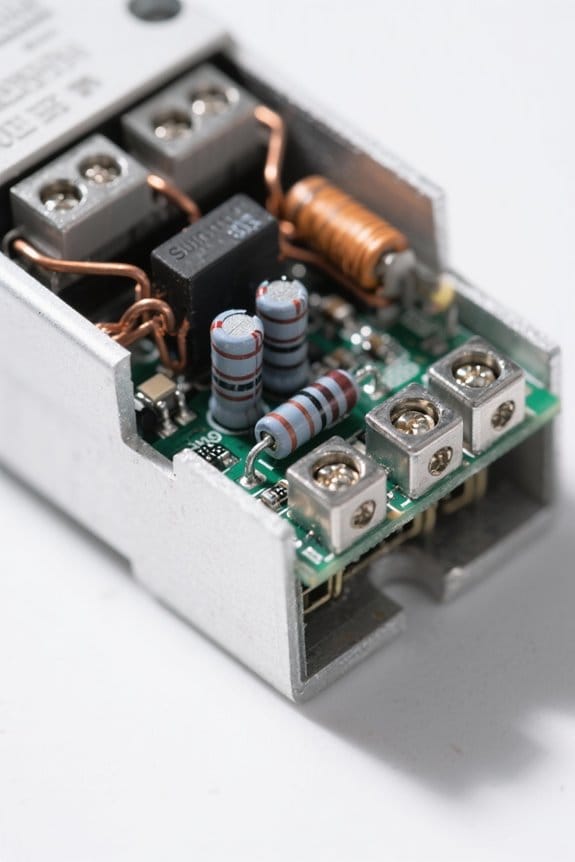
Metal oxide varistors (MOVs) form the core of most surge protectors and switch from non-conductive to conductive during voltage spikes. MOVs divert excess voltage to ground and act within nanoseconds, minimizing damage to electronics. For 120V systems, choose a surge protector with clamping voltage (let-through voltage) near 330V, for example a unit using MOV-14D471K or equivalent. Step 1: verify device rating and label shows 330V clamping voltage. Step 2: inspect MOV for discoloration or code markings. Step 3: replace worn MOV with identical spec part. Measure response time specification and confirm nanosecond class. You can test with certified surge tester or have a technician confirm that let-through voltage meets the 330V target. Maintain records, log date, part code, tester model, and test results daily. Also ensure surge protector components meet UL standards for safety and reliability.
Joules, Surge Current (kA) and Other Protection Metrics
The Joule rating measures energy absorption capacity, and a minimum of 1,000 J is recommended for sensitive electronics. The article explains Low Let-Through Rating alongside Joule rating and Surge Current Rating to compare performance. A surge protector with 1,200 J and 20 kA Surge Current Rating typically limits clamping voltage to under 400 V. Inspect labels: model SP-1200J-20kA shows 1,200 J, 20 kA, VPR 330 V. For safety, you can follow three steps: 1) verify label readings, 2) record Joules and kA, 3) replace units that show wear or reduced ratings. Check every 12 months and after major storms. These protection metrics help choose surge protectors offering low let-through through adequate energy absorption and low clamping voltage. Record model numbers and dates in maintenance log. Ensure surfaces are clean, dry surfaces for best adhesion.
UL 1449, Standards and What Ratings Really Mean
Following the previous metrics, UL 1449 defines specific tests and ratings for surge protective devices used on 120 V systems. The standard assigns Voltage Protection Ratings and Low Let-Through Rating values measured in volts to indicate expected device performance clearly. A recommended Low Let-Through Rating of 330 volts protects sensitive equipment operating at 120 volts, aligning with UL 1449 standards. Inspect labels for UL 1449 listing and model codes such as UL1449-3 or SPD1 before selecting surge protective device carefully. Assess clamping voltage, compare VPR numbers, and review independent test reports to confirm Low Let-Through Rating performance for sensitive equipment. Step 1 confirm UL 1449 marking, Step 2 verify VPR and 330 V LLTR, Step 3 choose lower clamping voltage for protection of sensitive equipment in practice. Additionally, ensure any connected extension cords are SJTW rated for outdoor durability and to maintain surge protector performance.
How Grounding, Wiring and Panel Location Affect Performance
Because a solid ground path is required, a Type 1 surge protective device (UL1449-3, model SPD1-120) can divert excess voltage to earth through a #6 AWG copper grounding conductor. Proper grounding improves surge protectors performance by lowering impedance, enabling faster diversion and reduced let-through to appliances connected downstream. Inspect wiring for corrosion, loose neutrals, and maintain 10 mm2 conductor equivalents or larger to preserve electrical continuity regularly. Locate surge protection devices at the service entrance or near electrical panel to minimize lead length and lower impedance. Follow local code, verify panel bonding, and use listed clamps with #6 AWG terminations to guarantee UL1449 rated performance. Technicians should record grounding resistance less than 5 ohms, document wiring routes, and retest after any panel relocation or upgrade. Additionally, surge protectors with 2000–4000+ joules and a 330V clamping voltage are recommended for optimal AV equipment protection.
When a Surge Protector Is Spent and Needs Replacement
When a surge protector shows signs of failure, a qualified technician should assess it immediately for replacement and document findings. Surge protectors include metal oxide varistors labeled MOV-20kA or SPD-120V-02 and UL 1449 listings, clamping voltage. First, you can check the Protected LED; if it is off, the unit needs replacement. Second, inspect for discoloration, melting, cracks, record measurements and serial number. Third, verify automatic shutoff activation and note event date and excess energy levels when known. After an electrical surge exceeding the protection rating or joule rating, the device should be retired. Regularly inspect every three to five years and replace units that fail any inspection step. You can tag replacements with date code YYYY-MM and store disposal records per facility policy SP-01. Verify compliance with UL 1449 3rd Edition to ensure reliable performance.
Recommended Products

FLAT PLUG POWER STRIP SURGE PROTECTOR: Features 7 outlets, 2160 joule rating, and an 7ft flat plug extension cord. Three wide-spaced outlets fit bulky transformers. Filters out threatening EMI/RFI line noise that can cause damage or data loss.

MULTI-OUTLET SURGE PROTECTOR: Power everything on your desk with a single compact multi outlet extension cord; 12 AC outlets with surge protection charge your computer, laptop, phone, camera, etc.

FLAT PLUG POWER STRIP SURGE PROTECTOR: Features 7 outlets, 2160 joule rating, and an 7ft flat plug extension cord. Three wide-spaced outlets fit bulky transformers. Filters out threatening EMI/RFI line noise that can cause damage or data loss.
Choosing the Right Let-Through and Joule Rating for Your Devices
How should one choose the right let-through and joule rating for connected equipment to guarantee reliable protection and minimal risk? One should compare the let-through rating (clamping voltage) and joule rating of a surge protector against device tolerances. For sensitive electronics, prioritize a low let-through rating such as 330V. Aim for a joule rating of at least 1,000 J. Step 1: list device normal operating voltage and max tolerated voltage. Step 2: select a surge protector with clamping voltage below that tolerance. Step 3: choose model codes like SP-330-1000 or ST-3300J for reference, and verify specifications. Step 4: confirm surge protection standards and replace units after major surges to maintain safety and longevity. Also verify UL/ETL certification and an LED protection status light to ensure ongoing functionality. Document let-through rating and joule rating on equipment inventory and labels.
Installation Practices That Maximize Surge Protection
Following the selection of appropriate let-through and joule ratings, installers should position surge protective devices within 20 meters of protected equipment. Mount SPDs near the main circuit panel, within half a meter of the service disconnect, to reduce conductor length. Verify the SPD installation includes short, heavy gauge bonding conductors, 6 AWG copper recommended for 200 A service. Confirm units have low let-through voltage for effective surge protection, and select VPR ratings ≤1500V common mode, ≤1000V differential mode. Make sure the enclosure and panel are properly grounded to a tested resistance below 5 ohms. Conduct visual and functional inspections every 12 months, testing indicators and replacing nonfunctional devices immediately. For safe work, you can follow manufacturer instructions and record product codes, date of installation. Additionally, consider using surge protectors with 14AWG cords for durability in workshop settings.
Differences Between Outlet Strips and Whole-Building SPDs
Typically, outlet strips protect individual devices at a single receptacle while whole-building SPDs protect circuits at the service entrance. Outlet strips are surge protective devices (SPDs) rated for 6 kA to 10 kA surge current rating and often list clamping voltages such as 400 V or 600 V. Whole-building SPDs often show 50 kA to 100 kA ratings and clamp near 330 V for 120/240 V systems. For installation, you can plug an outlet strip model PS-120 into a receptacle, or you can have a qualified electrician install a whole-building SPD, model WB-480, at the main breaker. Steps: turn off main, mount SPD at service, torque terminals to 35 ft-lb, restore power. The guide helps protect the electrical system. Check label dates, replace timely.
Recommended Products
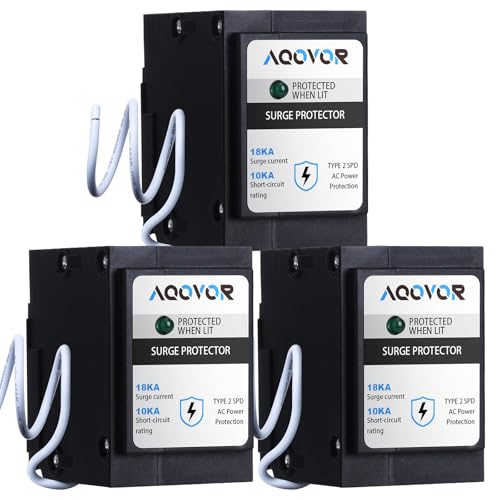
Uses 2 Branch Circuit Spaces
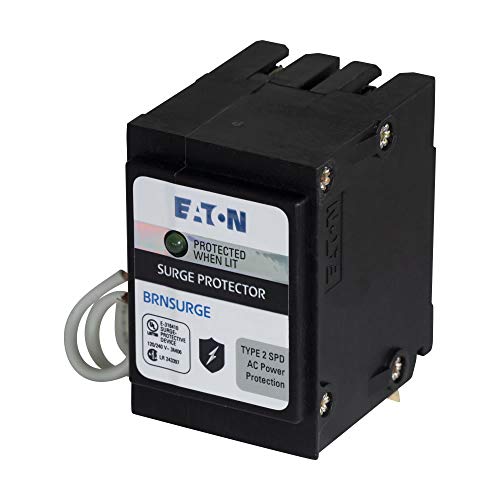
Uses 2 Branch Circuit Spaces

Universally connects to any manufacturer's load center (breaker box)
Frequently Asked Questions
What Is UL 1449 Let Through Rating?
UL 1449 let through rating measures maximum residual voltage passed during a surge. It is Let through measurement informing Surge protection technology, UL standards explanation, Voltage surge definitions, Circuit interruption importance and Equipment damage prevention.
What Do the Ratings on Surge Protectors Mean?
They indicate surge protector types, voltage spike protection level, energy absorption capacity and joules rating importance, response time measurement, and grounding/connection modes, guiding equipment compatibility issues and overall protection performance and safety for connected devices.
Does It Matter if You Get a 30 or 50 Amp Surge Protector?
Yes, choosing 30 versus 50 amps matters: amp compatibility determines appropriate surge protector types for appliance protection, affecting electrical safety; users should follow power ratings and usage guidelines to match load, prevent overloads, optimizing performance.
What Should You Never Plug Into a Surge Protector?
They should never plug dangerous devices such as high wattage appliances, medical equipment, power tools, sensitive electronics, or items on outdoor extension cords into a surge protector; contrary to myth, risks overload, thereby degrading protection.