As an Amazon Associate, we earn from qualifying purchases. Some links on this site are affiliate links at no extra cost to you. Our recommendations are based on thorough research and editorial judgment.

Technical Standards for Extension Item Manufacturing

Manufacturers must follow UL 817 and CPSA, use lab tests (UL or ETL) with reports. Cords require correct AWG, for example EC-14-10FT uses 14 AWG for 15 A, light-duty uses 18 AWG for 10 A. Outdoor jackets must be SJTW or WR and meet IP44. Plugs must meet NEMA specs with proper grounding and strain relief. Assemblies are tested at 120 V, 15 A for 10 minutes, you can retain batch codes. More details follow.
Key Takeaways
- Comply with UL 817 and CPSC requirements, including labeling, certification marks, and retention of test reports and calibration records.
- Select AWG wire based on amperage and cord length, testing voltage drop and current capacity per American Wire Gauge guidelines.
- Use jackets rated for intended environment (SJTW/WR for outdoor, IP44/IP65 where applicable) and insulation rated −40°C to 90°C.
- Ensure proper grounding, polarization, NEMA-compliant connectors, continuity testing, torque checks, and strain-relief verification.
- Maintain batch-level traceability, production QC records, dielectric/mechanical testing, and attach legible labels with product codes and safety warnings.
Regulatory Framework and Applicable Standards
You may be interested
When addressing regulatory requirements, manufacturers and importers must follow both UL 817 and the Consumer Product Safety Act (CPSA) as enforced by the CPSC. The regulatory framework requires adherence to UL 817 standards and documented safety characteristics for every SKU. Inspectors verify minimum wire size, strain relief, polarization, and outlet covers per UL 817. Outdoor extension cords must use jacketed cords and be labeled WR or SJTW for a 6 ft sample. To guarantee testing compliance, maintain test reports, calibration records, and a step-by-step inspection checklist. If cords are hazardous extension cords, companies must file reports with the CPSC immediately to avoid penalties. Non-compliance can trigger product recalls and import refusals. For guidance, you can follow the checklist and retain records for five years. Manufacturers should also consider using 10 AWG conductors for longer runs to minimize voltage drop and maintain safety.
Wire Gauge Selection and Current Carrying Capacity
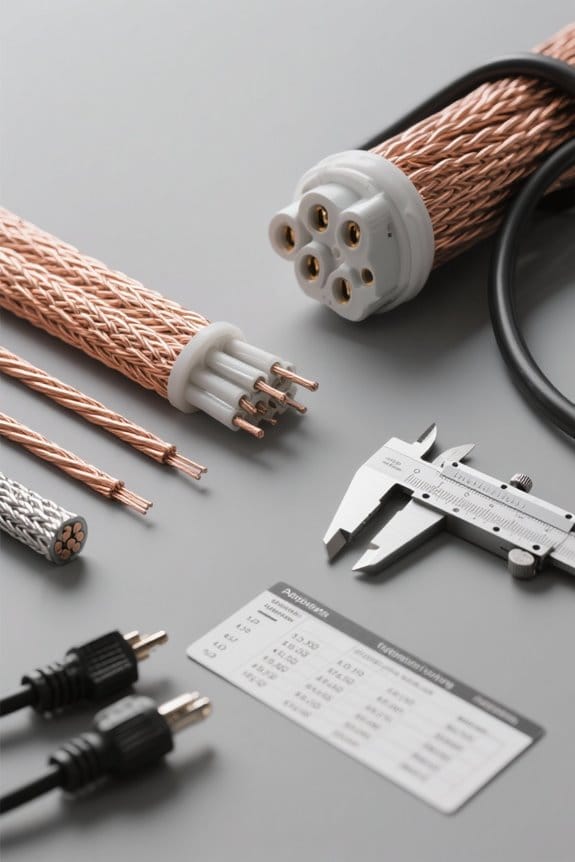
Following the regulatory checklist, manufacturers should select wire gauge based on AWG size, expected current, and cord length. Use the American Wire Gauge chart for wire gauge selection, matching amperage to diameter, for example 18 AWG for 10 amps. For medium loads, choose 16 AWG for up to 13 amps, 14 AWG for heavy loads up to 15 amps. Inspect cord length; longer runs increase voltage drop and reduce current carrying capacity. Step 1: identify device amperage and voltage. Step 2: choose AWG per table and UL 817 compliance. Step 3: label product as light-duty extension cords or heavy-duty extension cords accordingly. For compliance testing, you can measure voltage drop at rated current over 100 feet. Record results and file documentation for safety audits. For outdoor applications, manufacturers should prefer SJTW cords for weather-resistant performance.
Recommended Products

Lighted End and Extra Size for Safety: The power socket indicator light shows that power is on and the heavy duty extension cord 25 ft is ready for work; Extra size male NEMA 5-15P power plug and female NEMA 5-15R power socket for safety; It is thicker and more durable than the normal type on market and has high insulation safety performance to prevent electric shock; ETL/cETL listed for safe approval
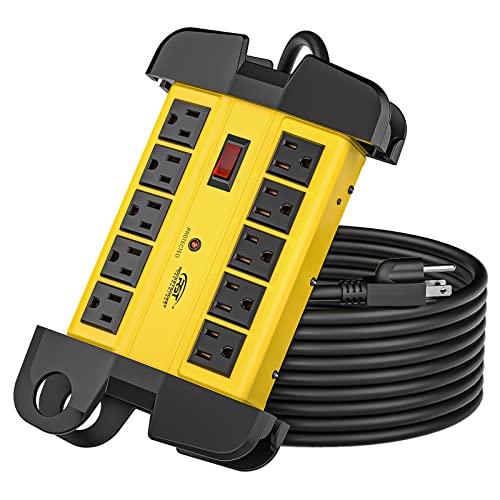
--Sturdy, extruded aluminum housing stands and Surge Protection constructed. CRST Industrial Power Strip is perfect for construction site, labs, and other harsh environments.

High Quality: 12/3 extension cord 25 foot, 15 amp, 125 volt, 1875 watt, NEMA 5-15P to NEMA 5-15R, ETL/cETL listed; The 3 outlet extension cord outdoor has 3 way plug outdoor; Heavy duty extension cord with multiple outlets can power multiple appliances at the same time; Making maximum use of existing resources
Insulation Materials and Jacket Requirements
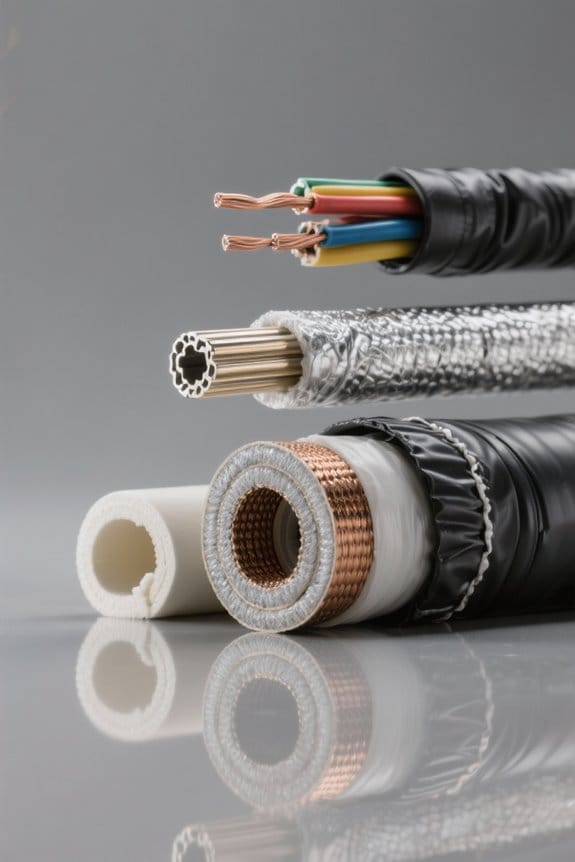
Insulation selection and jacket construction are critical for extension cord safety and regulatory compliance under UL 817. Manufacturers shall choose insulation materials rated to -40°C to 90°C, marked per UL 817 standards, e.g., SJTOW-14. Outdoor designs must use weather-resistant materials such as thermoplastic elastomer or neoprene, meeting IP44 splash rating. Indoor cords should employ flexible and abrasion-resistant jackets with shore A hardness 60-80, and 14 AWG minimum gauge. All jacket requirements include integrated strain relief at plug and socket, molded to 10 mm minimum length to prevent pull-out. Labels must show temperature rating, material code, and compliance marks; inspection step: verify markings against datasheet, step 1. These measures reduce electrical hazards and extend cord life; record test results to file code EXT-INS-001 after assembly. For harsher outdoor conditions consider higher protection levels such as IP54/IP55 for improved dust and moisture resistance.
Recommended Products

ETL Listed and Trusted: Heavy duty extension cord 15 ft rated 15 Amps, 1875 Watts and 125 VAC; Male NEMA 5-15P and female NEMA 5-15R; It is ETL/cETL Listed; ensuring its compliance with strict safety standards; Each outdoor extension cord passes a 2500V high voltage test before leaving the factory to ensure safety; Reliability and efficiency outdoor extension cord waterproof are capable of meeting most electrical needs

ETL Listed and Trusted: Heavy duty extension cord 50 ft rated 15 Amps, 1875 Watts and 125 VAC; Male NEMA 5-15P and female NEMA 5-15R; It is ETL/cETL Listed; ensuring its compliance with strict safety standards; Each outdoor extension cord passes a 2500V high voltage test before leaving the factory to ensure safety; Reliability and efficiency outdoor extension cord waterproof are capable of meeting most electrical needs

Heavy Duty & Safe: 14/3 extension cord heavy duty 15 feet; 15Amp 125Volt 1875 Watts, SJTW, ETL Listed; 14 AWG has a thicker wire diameter; can carry more power; and has less chance of getting hot; 1875W*1.5 (2812W) overload test; the wire temperature rise is qualified to ensure safety; Black extension cord 15ft suitable for indoor and outdoor; home office use
Grounding and Polarization Design Criteria
Because proper grounding and polarization prevent shock and miswiring, designers must follow strict layout and testing steps under UL 817. Include a grounding wire sized per duty, for example 18 AWG for light-duty, 10 AWG for heavy-duty cords. Confirm polarization by routing live and neutral to the correct blade terminals, mark blades clearly and test continuity. Provide strain relief at plug and connector ends with specific clamps, tighten to 4 N·m torque, and inspect for movement. Follow step-by-step testing and certification procedures, record results per UL 817 standards, and submit samples to UL or ETL labs. You can validate safety criteria using insulation resistance greater-than-1 MΩ, continuity under 0.1 Ω, dielectric test at rated voltage, one-hour loaded thermal test, record File E12345, inspector initials. For high-power applications such as dryers and Level 2 EV charging, use 10 AWG wires to minimize overheating and voltage drop.
Recommended Products
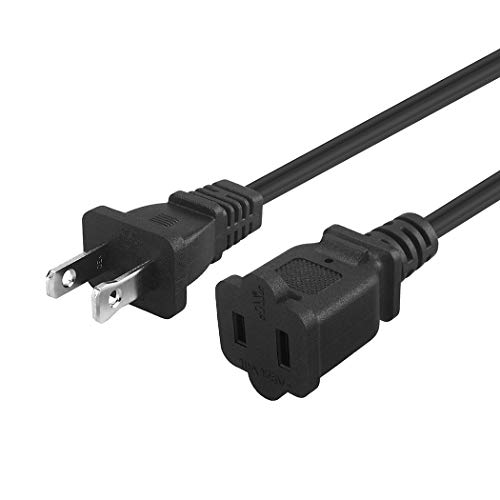
[POLARIZED] USA Canada 2Prong Male to Female extension Power cord. Both the male & Female ports are polarized.

2 to 3 Prong Outlet Adapter: This 2 prong extension cord can convert a polarized two prong outlet to a three prong outlet, ideal for the non-grounded outlets in older house. Transform 2-prong outlet into a safe, reliable charging station. Ideal for personal electronics, small appliances and more

INDOOR SlimLine 3 ft; 2 pronged extension cord Jacket Material-PVC
Plug and Connector Construction Standards
After confirming grounding continuity and correct blade orientation per UL 817, plug and connector construction must meet NEMA physical and electrical specifications. The manufacturer should select NEMA 1-15, 5-15 (125V, 15A), or 5-20 (125V, 20A) fittings per application. Guarantee polarization and grounding features are present and visible. Use durable materials such as thermoplastic or thermoset housings rated for 105°C. You can verify electrical characteristics against NEMA tables and UL 817 standards during inspection. Install connectors so pins align within 0.5 mm tolerance and seating depth meets supplier datasheet. Perform safety testing per UL 817, including dielectric, temperature rise, and mechanical endurance tests. Document part numbers, test dates, and pass/fail results for traceability. Also reference strain relief requirements in separate records. For audio and home theater applications, consider surge protectors rated at 2000–3000 joules or higher to ensure robust transient protection.
Recommended Products

Hinged design provides fast, easy assembly

Industrial grade straight blade plug, NEMA 5-15P
![[4-in-1] 12AWG 15Amp Household AC Plug to 20Amp T Blade Adapter Cable, 1FT](https://m.media-amazon.com/images/I/413QTLFRjwL._SL500_.jpg)
[SJTW 12AWG Heavy Duty ] Your devices need to support WIDE VOLTAGE [range 110V to 220V] in case of connect to Nema 6-15P or Nema 6-20P 15A/20A 250V ac power devices. [4 in 1] AC Power adapter. Nema 5-15P 15-AMP male 125V to Nema 5-15R/5-20R/6-15R/6-20R ac adapter
Strain Relief, Cord Termination, and Mechanical Integrity
One section of the assembly covers strain relief, cord termination, and mechanical integrity, which an inspector can verify with specific measurements and parts. The inspector checks strain relief clamps SR-10 and SR-12, 10 mm and 12 mm bore sizes, installed per drawing EIM-004. Validate cord termination torque at 2.5 N·m and set screw type CT-5 for secure contact. Confirm mechanical integrity by inspecting jacket, molded sections, and retention springs for cracks or displacement. Per UL 817, test samples using 1000-cycle flex and pull tests at 50 N for five seconds. Ascertain wire sizes AWG12 to AWG18 match connector ratings to prevent electrical failure and overheating. Maintain compliance records and perform regular inspection every six months. Document corrective actions with date, inspector name, serial number. Ensure that materials and construction meet outdoor use and durability expectations such as those required for a SJTW jacket.
Environmental Ratings for Indoor and Outdoor Use
Normally, inspectors verify environmental ratings by checking the cord jacket marking, construction, and label information against UL 817 and CPSA requirements. Inspectors confirm cord type (SJT, SJTW), conductor size (12 AWG, 16 AWG), and NEMA plug type (5-15, 5-20). For indoor and outdoor extension cords, follow these steps: 1) verify jacket rating matches UL 817 and CPSA listing; 2) confirm insulation thickness 0.8 mm minimum for 16 AWG, 1.2 mm for 12 AWG; 3) check strain relief and IP rating. Outdoor jackets must resist UV, moisture, and 0°C to 60°C. Note heavy-duty 20 amp extension use 12 AWG, NEMA 5-20, and comply with OSHA and environmental ratings to avoid electrical issues. You can document findings with code E12345. Record date, location, and inspector initials. Ensure cords also have ETL/cETL listings for quality assurance and compliance with safety standards.
Recommended Products
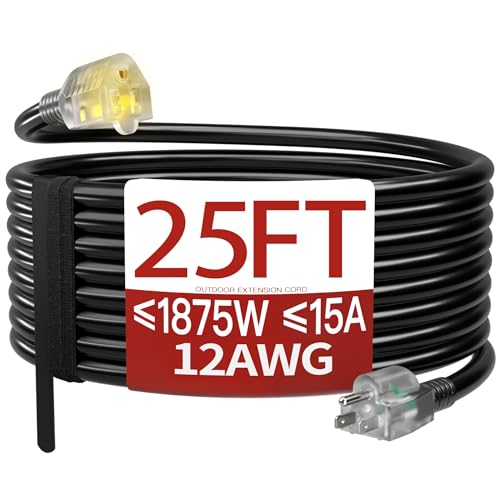
ETL Listed and Trusted: Heavy duty extension cord 25 ft rated 15 Amps, 1875 Watts and 125 VAC; Male NEMA 5-15P and female NEMA 5-15R; It is ETL/cETL Listed; ensuring its compliance with strict safety standards; each outdoor extension cord passes a 2500V high voltage test before leaving the factory to ensure safety; Reliability and efficiency outdoor extension cord waterproof are capable of meeting most electrical needs

ETL Listed and Trusted: Heavy duty extension cord 15 ft rated 15 Amps, 1875 Watts and 125 VAC; Male NEMA 5-15P and female NEMA 5-15R; It is ETL/cETL Listed; ensuring its compliance with strict safety standards; Each outdoor extension cord passes a 2500V high voltage test before leaving the factory to ensure safety; Reliability and efficiency outdoor extension cord waterproof are capable of meeting most electrical needs

Up to 1875W Applications: Outdoor extension cord waterproof 12 gauge, 15 amp, 125 volts, 1875 watts, NEMA 5-15P to NEMA 5-15R, SJTW power cord, ETL/cETL listed, heavy duty extension cord 50 ft is perfect for heavy duty use or powering major appliances
Independent Laboratory Testing and Certification Marks
Because extension cords marked by independent laboratories provide verified safety, inspectors should check for UL, ETL, or CSA marks. Independent laboratory testing confirms cords meet safety standards such as UL 817 and related codes. Inspectors verify certification marks on labels, including product code SJTW, wire gauge 16 AWG or 12 AWG, and grounding symbols. They record the lab name Underwriters Laboratories or ETL, test report number, and date. If marks are absent, the item fails compliance and must be removed. Steps: 1) inspect label lengthwise, 2) photograph mark, 3) log serial or batch code, 4) notify manufacturer. Testing focuses on electrical hazards, fire risks, strain relief, and grounding continuity measured to 0.1 ohm tolerance. Records are kept for five years under company policy requirements. Inspectors should also verify surge protection standards such as UL1449 when applicable to connected equipment.
Quality Control, Manufacturing Processes, and Traceability
Each production batch of extension cords must pass documented quality control steps that record materials, tests, and manufacturing dates. Manufacturers follow manufacturing processes that list steps: inspect wire AWG 16 or 14, verify plug NEMA 5-15P part code P-515, apply PVC insulation 2.0 mm for indoor or 3.5 mm for outdoor, assemble strain relief, and crimp terminals to 8 mm depth. You can run electrical integrity tests at 120 V, 15 A for 10 minutes, and measure resistance under 0.5 ohm. Traceability uses batch codes, supplier lot numbers, and digital logs linked to QR codes on reels. Records show compliance with safety standards, UL 817 documentation, and audit-ready test reports for recalls or investigations. Inspectors sign forms, date stamps, and store samples five years. For extreme weather and outdoor durability, manufacturers often specify SJTW or IP65 rated jackets to protect the cord.
Labeling, Instructions, and End‑User Safety Information
Following documented manufacturing and traceability steps, labeling and instruction content must be attached to each reel and cord assembly before shipment. Labels meet UL 817 and show product code EC-14-10FT or EC-12-3M, wire gauge 14 AWG or 12 AWG, and length 10 ft (3.0 m) or 3 m. Manufacturer instructions list maximum load 15 A or 20 A, compatible appliances, and prohibited uses. End-user safety information warns of hazards, including overload and using cords for permanent wiring. Step 1: verify label adhesion. Step 2: confirm legible print, product code, wire gauge, and length. Step 3: include warnings about not connecting multiple cords or power strips to prevent electrical hazards. Records retain batch number and date. Documentation stored for ten years per company policy archived. Labels must also indicate UL or ETL listing to ensure safety.
Frequently Asked Questions
What Is the OSHA Standard for Extension Cord Use?
OSHA requires extension cords be used temporarily; mandates extension cord safety, electrical equipment inspections, preventing workplace electrical hazards, enforcing extension cord ratings, indoor versus outdoor usage, surge protection usage, proper cord storage, extension cord maintenance.
What Are the Rules for Extension Cords?
They must meet safety features like strain relief and polarization, use appropriate cord materials, match power ratings, observe lengths restrictions, follow usage guidelines, heed maintenance tips, proper storage practices, and utilize color coding for identification.
Which of the Following Are Requirements for Extension Cords?
Like a lighthouse guiding ships, required elements are safety ratings, cable types, power ratings, wire gauge, insulation materials, usage guidelines, color coding, and maintenance tips to guarantee safe temporary electrical connections and prevent overloading hazards.
What Is the OSHA Standard for Strain Relief?
OSHA requires adequate strain relief to prevent conductor exposure and maintain secure connections; compliance standards, workplace safety, and manufacturing regulations require strain relief materials, electrical cord design, strain relief testing, industry best practices, product durability.