As an Amazon Associate, we earn from qualifying purchases. Some links on this site are affiliate links at no extra cost to you. Our recommendations are based on thorough research and editorial judgment.


Consumer Guides: Reading Extension Cord Packaging

Packaging shows wire gauge, amperage, length and certification. It lists 16 AWG or 12 AWG, 10–15 A, 125 V, and length in feet. Look for UL or ETL marks and model code EF-1234. Step 1: match AWG to device load. Step 2: confirm max watts (120 V × 15 A = 1,800 W). Step 3: choose indoor or outdoor jacket. You can follow the package warnings and specifications to learn full usage and safety details.
Key Takeaways
- Check amperage, wire gauge (AWG), and length on the label to ensure the cord can handle your device’s electrical load.
- Verify third‑party certification marks (UL, ETL) and referenced standards (e.g., UL 817) for verified safety compliance.
- Confirm indoor or outdoor/all‑weather listing and inspect jacket thickness—outdoor cords have thicker insulation.
- Use the rated voltage and amperage to calculate maximum wattage (e.g., 120 V × amps) and avoid exceeding it.
- Read warnings and safety features (GFCI, three‑prong grounding, no daisy‑chaining), and record the product code for future checks.
Why Packaging Labels Matter for Extension Cord Safety
You may be interested
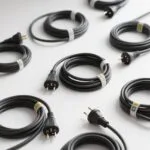
Three label elements on extension-cord packaging carry critical safety data and guide correct selection for devices, preventing overloading and fires. Packaging labels list maximum amperage rating, wire gauge such as 16 AWG or 12 AWG, and length in feet for load calculations. They state indoor or outdoor use, with example code 14/3 indicating three-conductor, 15A capacity. Labels show UL certification marks and references to safety standards like UL 817 or CSA C22.2, giving measurable assurance of testing. Warnings note electrical hazards from daisy-chaining or using space heaters over 1500 W. Step 1: verify device amperage. Step 2: match cord amp rating and wire gauge. Step 3: confirm environmental rating before installation. Record product code EF-1234 on label for future replacement and safety checks annually. Additionally, look for cord reels with 12/14 AWG cable and ETL/UL listing for heavy-duty applications to ensure durability and safety.
Identifying Certification Marks: UL, ETL, and Third-Party Testing
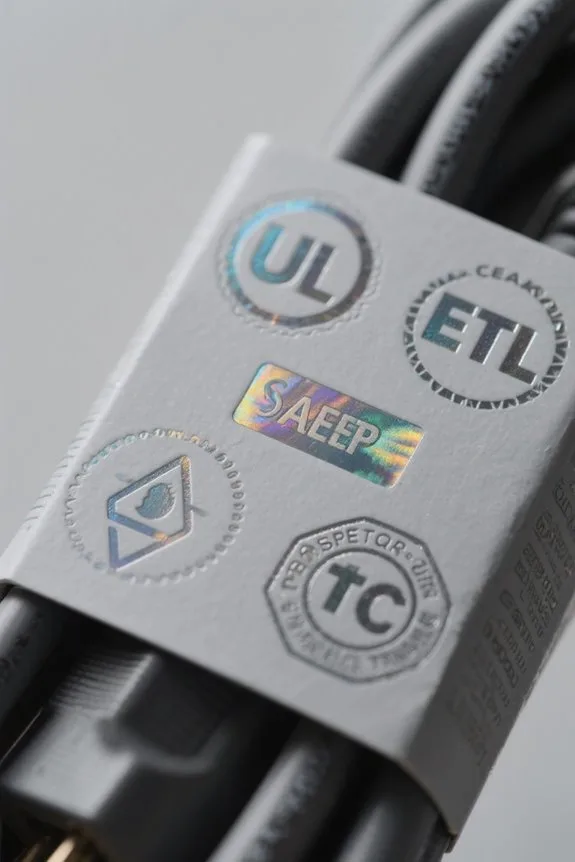
Certification marks, such as UL and ETL, indicate that an extension cord has passed standard electrical tests for safety. Consumers should inspect packaging for certification marks, the UL 817 reference or an ETL file number clearly printed near the label or panel. Follow three steps: locate the mark on the front, read the safety label for voltage and amperage, and check cord gauge. Record specific details such as 16 AWG or 12 AWG, rated volts like 125 V, and any manufacturer product code shown. Verify third-party testing statements and laboratory names, because UL and ETL marks indicate verified electrical safety and reduced shock risk. If certification marks are absent, the packaging likely fails accepted testing and extension cords consequently should not be purchased immediately. Many tapes and labeling materials used on packaging advertise residue-free formulas to ensure they can be removed cleanly without leaving adhesive behind.
Recommended Products

16/3 GROUNDED POWER SPECS – 16AWG three-wire extension cord with three-prong outlet rated 13A/125VAC/1625W safely extends any grounded AC outlet for reliable indoor or outdoor power distribution
![[ETL Listed] Miady Short Power Extension Cord Outlet Saver, 16AWG/13A, 3 Prong (4 Pack, Black, 8 Inch)](https://m.media-amazon.com/images/I/419WnqnjrXL._SL500_.jpg)
【OUTLET SAVER】 - Maximize the usage of power strips and wall outlets, don't need to worry about large plugs waste outlet space any more.

Sleek Cubic 3-way Design: Unlike traditional extension cord, the smart-looking white extension cord 6 feet features 3 grounded outlets on different sides, allowing you to plug in multiple appliances without blocking neighboring outlets. Max 1625W (125V/13A).NOTE: Not for recessed floor outlet
Determining Indoor vs. Outdoor Suitability
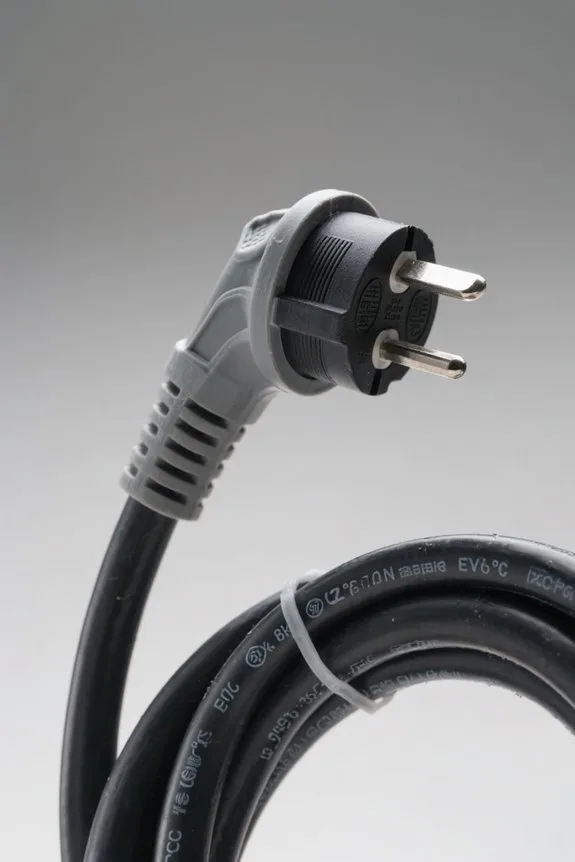
Often a shopper will check the packaging label to determine whether a cord is for indoor or outdoor use. The packaging should state “indoor” for indoor cords, or “outdoor” or “all-weather” for outdoor extension cords. Inspect insulation thickness and construction; indoor cords use lighter insulation, outdoor types have thicker jackets for moisture and temperature resistance. Check the AWG number printed on the label to confirm suitability for heavier loads and durability outdoors. Verify presence of the UL (Underwriters) mark and any specific outdoor listing under safety standards. Avoid using indoor cords outside, since exposure can degrade insulation and cause electrical shocks. Follow manufacturer product codes and step-by-step instructions on packaging for correct placement and storage. Store coils loosely, avoid kinks, and inspect before use. Also look for SJTW or IP65 ratings and ETL/UL markings to ensure weather and safety protections.
Recommended Products

ETL Listed and Trusted: 15 ft extension cord rated 13 Amps, 1625 Watts and 125 VAC; Male NEMA 5-15P and female NEMA 5-15R; It is ETL/cETL Listed; when using it for the first time; if 15ft extension cord feels stiff; this is a normal phenomenon caused by the tight packaging during manufacturing; don't worry; simply lay it flat at room temperature; 15 foot extension cord will naturally regain its flexibility and lie flat after a short period

ETL Listed and Trusted: 10 ft extension cord rated 13 Amps, 1625 Watts and 125 VAC; Male NEMA 5-15P and female NEMA 5-15R; It is ETL/cETL Listed; Ensuring its compliance with strict safety standards; Each outdoor extension cord passes a 2500V high voltage test before leaving the factory to ensure safety; Reliability and efficiency outdoor extension cord waterproof are capable of meeting most electrical needs; Please note that the “Indoor” label on the product is only a partial identifier; This product is actually safe for outdoor use as its external power cord is made of durable SJTW material; offering excellent outdoor abrasion resistance; moisture resistance and weather resistance

ETL Listed and Trusted: 75 ft extension cord rated 10 Amps, 1250 Watts and 125 VAC; male NEMA 5-15P and female NEMA 5-15R; It is ETL/cETL Listed; ensuring its compliance with strict safety standards; each outdoor extension cord passes a 1500V high voltage test before leaving the factory to ensure safety; reliability and efficiency outdoor extension cord waterproof are capable of meeting most electrical needs
Decoding Wire Gauge, Amperage, and Maximum Wattage
A useful starting point is the wire gauge, shown as an AWG number, which identifies conductor thickness and current capacity precisely. 16 AWG wire has a conductor diameter of about 1.29 mm and suits light-duty tools, while 12 AWG at about 2.05 mm suits heavy-duty appliances. Packaging lists wire gauge, amperage, and maximum wattage together. The amperage rating specifies the maximum electrical current the cord can safely carry, commonly 10 to 15 amps for residential use. Maximum wattage equals voltage multiplied by amperage, for example 120V × 15A equals 1,800 watts. Consumers should read these labels, match ratings to device requirements, and select thicker gauge cords for higher loads. Proper selection improves performance and safety with extension cords. Inspect packaging date and manufacturer code. For longer runs like 100-foot cords, choose a lower AWG to reduce voltage drop and ensure safe operation with 12-gauge wire.
Recommended Products

Up to 1875W Applications: Outdoor extension cord waterproof 100ft 12 gauge, 15 amp, 125 volts, 1875watts; Male power plug NEMA 5-15P; Female power socket NEMA 5-15R; SJTW power cord; ETL/cETL listed; Heavy duty extension cord 100 feet is perfect for any heavy duty use circular saws, string lights, block heater, lawn mowers, gardening, landscaping, construction site, welding work, or powering major appliances

Lighted End and Extra Size for Safety: The power socket indicator light shows that power is on and the heavy duty extension cord 100 ft is ready for work; Extra size male NEMA 5-15P power plug and female NEMA 5-15R power socket for safety; ETL/cETL Listed for safe approval

ETL Listed and Trusted: Heavy duty extension cord 100 ft rated 15 Amps, 1875 Watts and 125 VAC; Male NEMA 5-15P and female NEMA 5-15R; It is ETL/cETL Listed; ensuring its compliance with strict safety standards; each outdoor extension cord passes a 2500V high voltage test before leaving the factory to ensure safety; Reliability and efficiency outdoor extension cord waterproof are capable of meeting most electrical needs
Understanding Cord Length, Voltage Drop, and Performance
After matching wire gauge and amperage, attention shifts to cord length because longer cords increase resistance and reduce voltage at the device. The guide explains that cord length directly affects voltage drop and overall performance of extension cords. Readers are instructed to calculate total amperage load of connected tools, then select wire size that limits voltage loss. A practical rule: keep voltage drop under 3 percent; for 120 V circuits that is about 3.6 V. For 100 feet, a 12-gauge cord can lose roughly 3 V at 15 A. Step-by-step: list device amps, sum to get amperage load, choose minimum wire size from packaging, verify cord length will not cause excessive electrical resistance. Labels and product codes should be checked before purchase and model. Also verify that cords are SJTW-rated and use pure copper conductors for outdoor use to ensure durability and safety.
Spotting Safety Features: GFCI, Lighted Plugs, and Grounding
How should one spot essential safety features when reading extension cord packaging to guarantee safe, code-compliant use? Inspect labels for GFCI modules, marked compliance, and UL 817 certification. You can check for lighted plugs that show cord power at a glance. Note three-prong grounding mentions, without discussing plug polarization specifics. Read amperage ratings such as 13 A or 15 A and gauge markings like 14 AWG or 12 AWG. Verify intended use: indoor, outdoor, or wet locations. Look for safety standards phrases and model numbers, for example, Model X1234 or Type SJEOW. Confirm maximum electrical load in watts or amps to avoid overheating and fire hazards. Follow packaging steps: match amperage, match gauge, confirm UL 817, and test lighted plug before use each time. Also check for surge capacity ratings such as 20kA or higher to ensure robust protection.
Recommended Products

Reliable Power Protection: The Southwire Yellow Jacket GFCI Extension Cord in-line GFCI cord with 12/3 gauge wire cord offers safe, durable power for indoor or outdoor tools, appliances, and lawn equipment

【Heavy Duty Cord】 15A / 125V / 1875W; premium SJTW 12/3 gauge contractor grade power cable has thicker, 600-volt insulation, designed for heavier use, leaf blower, lawn mower, pressure washer, weed whacker, electric drill, power saw, or Christmas holiday lights

Manual GFCI Protection - Attached GFCI ensures more safety when in use, provide electric shock protection and prevent the risks of electrical fire caused by ground fault; it need to push the reset button to restore the power after interruption,please check your devices before push it to ensure the safety.
Interpreting Plug Type, Polarization, and Grounding Requirements
Instruction labels guide users to identify plug type, polarization, and grounding before using any extension cord. Packaging lists plug type as two-prong or three-prong, with three-prong providing grounding requirements for safety against shock. Polarization is shown by plug shape and blade orientation, ensuring live and neutral connect correctly to prevent overheating. Consumers should note the NEMA designation, which specifies configuration and amperage for safe device compatibility. The UL (Underwriters) mark indicates testing to industry safety standards and should be present on reputable products. The gauge rating, such as 12 or 14 AWG, appears prominently to indicate wire thickness and amperage capacity. Labels often include step-by-step hookup limits, voltage, and maximum amperage to guide correct selection. Consumers may verify cord condition and match device ratings. For outdoor use, choose cords labeled SJTW for better weather resistance.
Recommended Products

Heavy Duty Construction: Features 16 AWG SJTW gauge wire designed to handle demanding power requirements safely and efficiently, providing reliable electrical connectivity for your tools and appliances with superior current carrying capacity

POWER SPECS — 16AWG grounded three-wire extension cord rated 125VAC/13A/1625W extends a single three-prong outlet from any grounded receptacle for reliable indoor or outdoor power

【16/3 SJTW Cord】15 ft 16 gauge 3 outlets black extension cord with multiple outlets; Male plug NEMA 5-15P, female plug NEMA 5-15R; Delivers 13 amp, 125 volts, 1625 watts power, ETL/cETL listed for safe indoor & outdoor use
Reading Care, Storage, and Usage Instructions on the Package
Most packages list exact wire and power ratings, for example 14 AWG, 125 V, 15 A, or 12 AWG, 250 V, 20 A. The label instructs to always check the AWG and maximum wattage before connecting devices. It notes whether to use extension cords for indoor or outdoor use and gives environmental ratings. Care instructions recommend avoiding sharp bends, keeping the jacket dry, and inspecting plugs near electrical outlets. Packaging shows how to check your extension for frays, burned spots, and loose prongs. Cords storage guidance directs coiling without kinks, securing loops, and storing in a dry location under 60% humidity. Usage steps list amperage limits, distance derating guidance, and recommend matching cable gauge to device power. Labels may include product codes and dates. For longer runs, consider using a 12-gauge cord to minimize voltage drop and maintain optimal performance.
Frequently Asked Questions
How to Read Extension Cord Markings?
They read cord markings by checking cord specifications, safety ratings, and gauge size for power capacity; confirming cord length and environment suitability, and following usage recommendations to ascertain proper current load, insulation, certified safe operation.
How to Wrap an Extension Cord Properly?
They coil an extension cord using over-under loops, employing cord management techniques and safe wrapping methods for minimizing tangles, considering length considerations, avoiding damage, maintaining flexibility, and choosing storage solutions protect and prolong cord life.
What Is the Rule for Extension Cords?
As if everything depended on it, they follow safety guidelines: observe cord length, wattage capacity, and gauge rating; use rated cords for outdoor use; choose multi outlet options with surge protection; never replace fixed wiring.
How to Tell if an Extension Cord Is Good?
One judges an extension cord as good by checking safety ratings, appropriate cord length, correct gauge types, clear indoor use or outdoor durability labeling, manufacturer listed appliance compatibility, grounded/GFCI features, explicit warnings about overload risks.