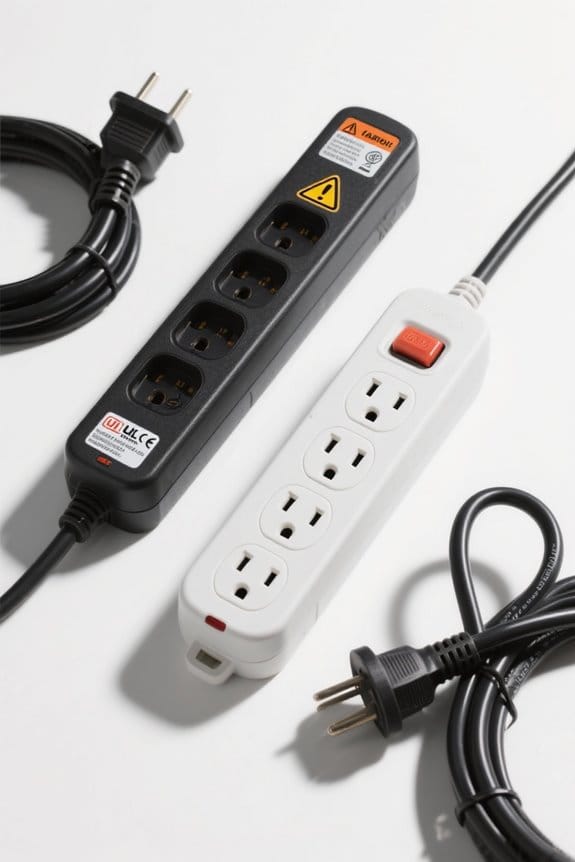
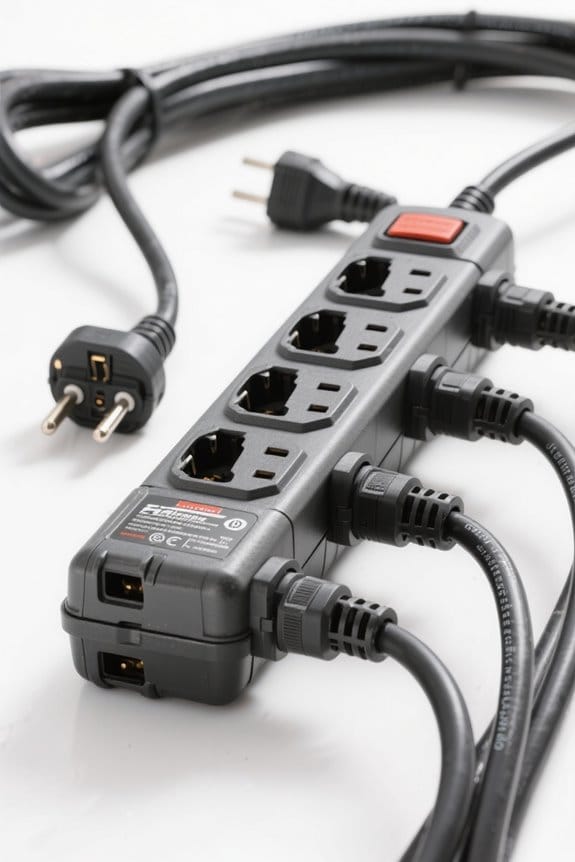
As an Amazon Associate, we earn from qualifying purchases. Some links on this site are affiliate links at no extra cost to you. Our recommendations are based on thorough research and editorial judgment.

The Risks of Daisy-Chaining Surge Protectors

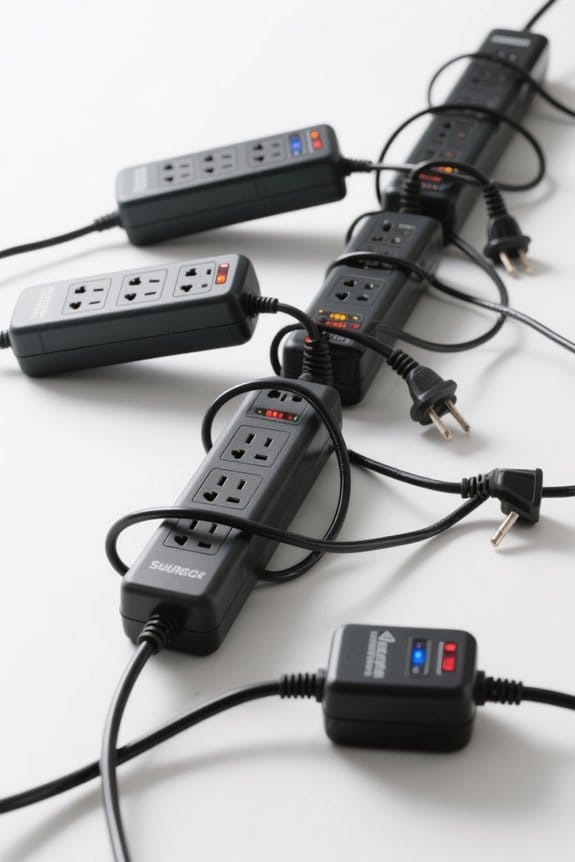
Daisy-chaining surge protectors increases the risk of overload, overheating, and fire on 15 A or 20 A circuits. Metal Oxide Varistors (MOVs) wear with use and lose protection after major spikes. Mixing models like SP-2000 and PR-3000 can bypass ratings and void warranties. Inspect monthly, unplug before inspection, and replace units after storms or every 3–5 years. Use a single high‑joule (2,000–3,000 J) protector or a hardwired whole‑house unit, and you can safely learn more.
Key Takeaways
- Daisy-chaining increases total load, risking circuit overload, overheating, breaker trips, and potential fires.
- Connecting multiple protectors can void manufacturer warranties and violate UL 1363 and local electrical codes.
- MOVs in chained units may not clamp properly, reducing surge protection effectiveness and leaving devices vulnerable.
- Repeated surges degrade MOVs faster in daisy-chained setups, shortening protector lifespan and reliability.
- Safer options: use a single high-joule protector, whole-house protection, or consult an electrician for dedicated outlets.
What Is a Surge Protector?
You may be interested
A surge protector is an electrical device that diverts excess voltage to ground using internal Metal Oxide Varistors (MOVs). Surge protectors monitor electrical flow and guard against voltage spikes, activating indicators and breakers when abnormal conditions appear on connected circuits. Consumers should select units with at least 2,000 to 3,000 joules rating, for typical home or office electronics protection. Look for models with circuit breaker switches, LED status lights, and manufacturer codes like SP-2000 or PR-3000 on the product label. Do not daisy chain surge protectors; connecting multiple units can overload a branch circuit and increase potential fire hazards greatly. For safe setup, plug a single protector into a grounded outlet, verify LED green status, and replace any unit after a heavy surge event. Also look for UL 1449 listing to ensure compliance with safety standards.
Recommended Products

FLAT PLUG POWER STRIP SURGE PROTECTOR: Features 7 outlets, 2160 joule rating, and an 7ft flat plug extension cord. Three wide-spaced outlets fit bulky transformers. Filters out threatening EMI/RFI line noise that can cause damage or data loss.

MULTI-OUTLET SURGE PROTECTOR: Power everything on your desk with a single compact multi outlet extension cord; 12 AC outlets with surge protection charge your computer, laptop, phone, camera, etc.

FLAT PLUG POWER STRIP SURGE PROTECTOR: Features 7 outlets, 2160 joule rating, and an 7ft flat plug extension cord. Three wide-spaced outlets fit bulky transformers. Filters out threatening EMI/RFI line noise that can cause damage or data loss.
How Surge Protectors Work
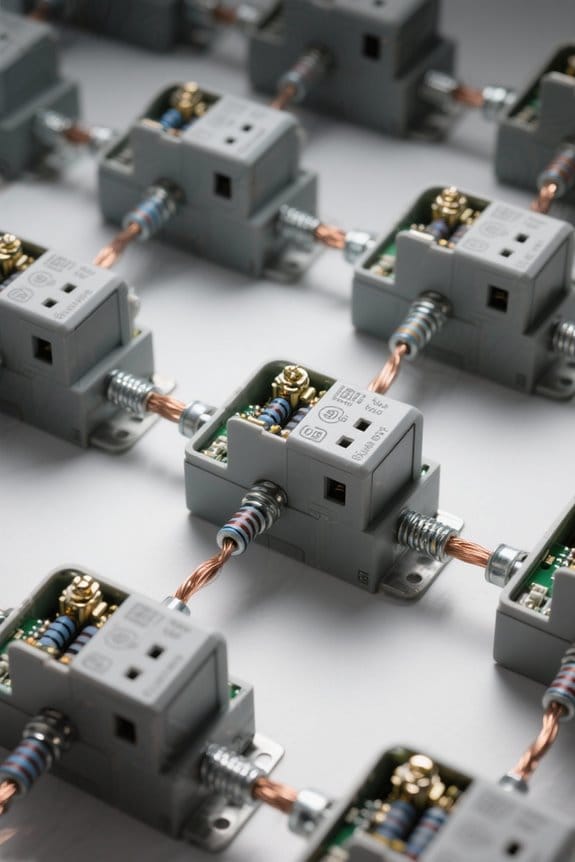
Following the basic setup advice, the internal parts and response times explain how surge protectors stop dangerous voltage spikes. They explain how surge protectors work: they use Metal Oxide Varistors (MOVs), MOV-14-275, to monitor electrical current and divert excess to ground. The internal circuitry senses a spike and reacts within 1 nanosecond. MOVs clamp voltage, absorbing energy measured in joules; devices rated SP-2000J, 2,000–3,000 J, give recommended surge protection. Over time MOVs degrade after clamping and lose effectiveness. Inspection steps: 1) verify model rating on the unit label; 2) test continuity per manufacturer step A-101; 3) replace if indicator or label shows end-of-life. Proper use reduces fire risks and preserves equipment. Monthly visual checks and replacement after major storms prolong reliable surge protection life. For organizing spare parts and small accessories related to maintenance, consider using Magnetic sheets to keep components secure and easily accessible.
Why Daisy-Chaining Is Dangerous
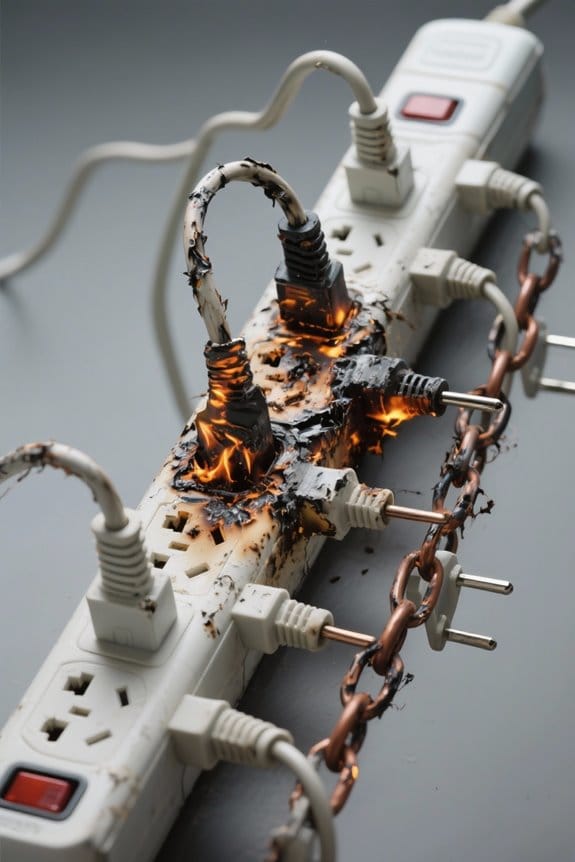
Because homeowners sometimes connect multiple surge protectors in series, the combined load can exceed a single circuit’s safe capacity. This practice of daisy chaining surge protectors raises risk of overheating, tripping breakers, and creating a fire hazard. It can cause electrical failure when total draw exceeds 15 A or 20 A power supply or circuit ratings, depending on wiring. Mixing devices with different MOV specs, for example MOV-14D471K or MOV-20D471K, reduces coordinated surge protection effectiveness. Surge energy degrades MOVs after repeated events; users can expect reduced clamping at 500–1000 joules after dozens of surges. To inspect, a homeowner should unplug devices, check label codes like UL1449, measure load with a 0.1 A resolution meter, and replace overloaded units regularly. This reduces risk of circuit damage and loss. Also, minimizing voltage drop by using appropriate cord gauges helps maintain safe power delivery when using long runs.
Electrical Code and Safety Standards
Codes and standards restrict daisy chaining surge protectors and require strict compliance with manufacturer instructions and listed ratings. OSHA 29 CFR 1910.303(b)(2) mandates using equipment per instructions, and electrical safety codes forbid improper connections. UL 1363 (cord-connected RPT) explicitly states RPTs are not intended to connect to other RPTs, so surge protectors work as tested. NFPA 1 requires proper connection, load management, and avoidance of overloading to reduce risk of fire. You can check labels for listed ratings like 15 A, 125 V, and part numbers P/N 12345. Inspect devices for UL marking, read instructions, do not chain RPTs together. Document compliance, avoid exceeding 80% continuous load on a 15 A circuit, replace damaged units. Address violations promptly per code and notify building manager. For robust protection, choose surge protectors with high joule ratings such as 2700 joules or more.
How MOVs Protect — and Their Limitations
When a transient voltage spike occurs, an MOV clamps the voltage and diverts excess current to ground. Surge protectors with higher joule ratings, typically 2,000–4,000 joules, are recommended for protecting high-value electronics. MOVs use metal-oxide discs rated by varistor voltage, e.g., 275 V, and energy absorption in joules. Surge protectors should show 2,000–3,000 J ratings and clipping at 330 V or lower. MOVs degrade with each event, so you can track life by monitoring indicator LEDs and model codes like SPD-ABC123. Adding multiple devices by daisy-chaining causes uneven activation and reduced combined effectiveness. One protector may absorb a surge, leaving downstream units useless. Inspect units after major storms, replace MOVs showing discoloration or >50% of rated joules used. Disconnect power, wait 5 minutes, then swap with identical rated parts per manufacturer step-by-step guidance to avoid fire and document changes.
Recommended Products
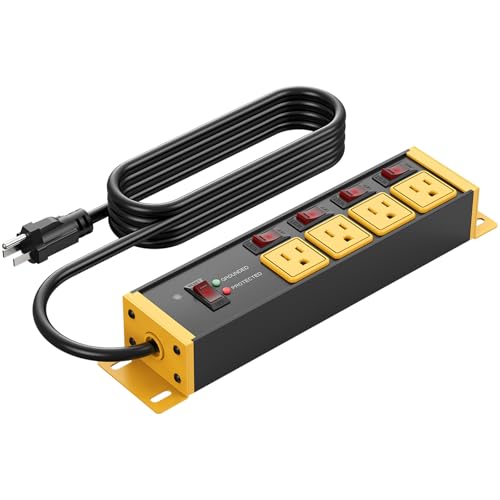
Heavy duty power strip 20 amp with 4 outlets and individual switches, 5-20R, 6-20R and come with standard 3 prong 5-15P plug. Wall mount design, can be applied to high power industrial equipment.

Heavy Duty Power Strip: SUPERDANNY 15A/1875W heavy duty power strip features 13 widely-spaced outlets and 4 fast-charging USB ports (including 2 Type-C), handling all your power needs from one place. The multiple outlets replace your old power strips and accommodate all your equipment without any interference.
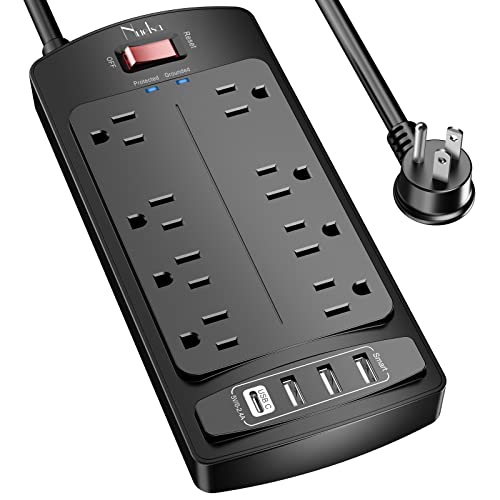
【Power Strip with 8AC outlets & 4 USB】- Power bars with surge protector with 8AC outlets & 4 USB charging ports (1 USB C Outlet), 6 Feet Heavy Duty extension cord, surge protector(2700 Joules) with overload protection protects against spikes and fluctuations.
Real-World Fire and Overload Risks
Although often convenient, daisy chaining surge protectors creates a serious overload and fire hazard on a standard 120 V, 15 A household circuit. The practice raises risk by exceeding 1800 watts on a 15 A circuit, causing breakers to trip and connectors to overheat. Overheated protectors can melt plastics and internal parts, producing smoldering failures that lead to fire. Codes NFPA 70 and OSHA explicitly forbid daisy chaining surge protectors, and CPSC data links such setups to household fires. Each protector has a joule rating, for example 600 J model SP600X; check that rating and remove extra strips from one outlet. Inspect cords monthly, note serials or product codes, and replace units damaged after a power surge. Avoid units rated below 10 A entirely. Also check the joule rating to ensure adequate protection for your devices.
Safe Alternatives to Daisy-Chaining
A safer approach uses a single, high‑joule surge protector or alternate power solution rated for the circuit and for total device load. Select surge protectors rated 2,000–3,000 joules, model SP-3000J or equivalent, with built-in overload protection and a 15 A, 120 V rating. Install a single power strip near devices, avoid connecting another power strip to it, and verify label amperage equals circuit capacity. As safe alternatives, add one or two dedicated wall outlets, 12 AWG wiring, installed per local code, by a licensed electrician. Consider a UPS such as APC BE600M1 for computers, which gives surge protection plus 600 VA battery backup. Use a single heavy-duty extension cord, 14 AWG or lower, to reach distant outlets without chaining devices, safely preventing circuit overloads. For broader protection, consider installing a whole-house surge protector rated for adequate surge capacity to defend against large transients.
Recommended Products

SHIPMENT CONTAINS: 12-outlet surge protector power strip with 8-foot extension cord delivers reliable electricity and safeguards electronics from surges and outages

11-in-1 Power: Features 8 AC outlets, 2 USB-A ports, and 1 USB-C port—enough to keep an entire room powered up.
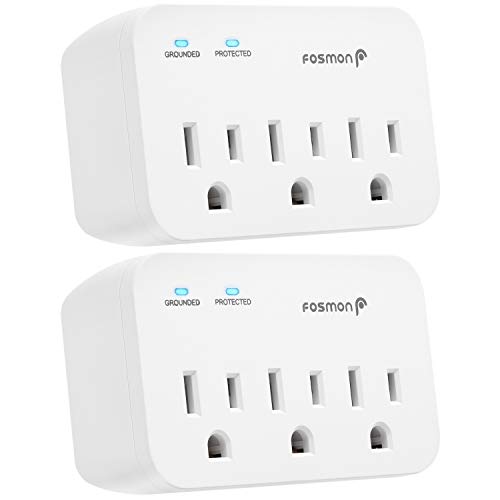
[3 Plug Extension Outlet] This 3 way plug adapter instantly adds a safe and secure charging center to any home, dorm room, or office environment. The wall outlet surge protector adapter provides you with the ability to power 3 grounded plug-in devices while maintaining a clean, orderly appearance.
Best Practices for Surge Protector Use
After installing a single high‑joule unit such as model SP‑3000J, users should follow specific handling and inspection steps to maintain protection. Operators must plug surge protectors directly into a wall outlet and never use daisy-chaining to reduce the risk of overload. Verify UL certification on the label, for example UL1449. Check the joule rating, aiming for 2,000–3,000 J minimum. Inspect cords and indicators monthly, looking for frays, discoloration, or a tripped LED. Replace units that show burn marks or have absorbed a major surge. For appliances with motors or compressors use dedicated power strips rated for heavy loads. In households and offices, follow these steps, document inspection dates, and store unit manuals and receipts for warranty claims. Schedule replacements every three to five years. Consider choosing units with metal housings and high joule ratings for increased durability in harsh conditions.
Recommended Products

1. 18 Wide-Spaced AC Outlets + 4 Smart USB Ports (2×USB-A + 2×USB-C w/ PD20W) — finally charge all your devices — laptop, monitor, gaming console, phone, tablet — without blocking a single plug; no more adapter wars or frantic unplugging.
![[ETL Listed] Cable Matters 1350J Single Outlet Surge Protector, White](https://m.media-amazon.com/images/I/31e0JpMEJvL._SL500_.jpg)
Reliable Surge Protection for Electronics: Protect your electronics with this single plug surge protector. The wall surge suppressor provides a surge-protected 3-prong grounded outlet, offering reliable protection for devices like TVs, PCs, and gaming consoles from power surges.
![[ETL Listed] Cable Matters 2-Pack 1350J Single Outlet Surge Protector](https://m.media-amazon.com/images/I/314n2Zz2FhL._SL500_.jpg)
Reliable Surge Protection for Electronics: Protect your electronics with this single plug surge protector. The wall surge suppressor provides a surge-protected 3-prong grounded outlet, offering reliable protection for devices like TVs, PCs, and gaming consoles from power surges.
Choosing the Right Surge Protection for Your Home
When selecting home surge protection, buyers should choose units with at least 2,000–3,000 joules and UL1449 certification. Choose surge protectors with a clamping voltage of 330 volts or lower for better response. Verify the label shows UL certified or UL1449 listing and a joule rating of 2,000–3,000. Prefer models that include a built-in circuit breaker and a reset switch. You can inspect the unit for model numbers, such as SPD-330 or ANSI/UL1449-4. Replace units after a major surge or every three to five years. Do not chain strips or perform daisy-chaining surge protectors; plug one device per protected outlet. Install whole-house surge devices at the service panel and consult a licensed electrician for hardwired options. Record installation date and model. Many recommended models also offer USB ports and wall-mountable designs, so look for products with high joules ratings.
Recommended Products

12-outlet power strip surge protector delivers reliable electricity and safeguards electronics from surges and outages

Power more – turn 1 outlet into 7 and power all your Electronic devices and the 2 USB ports allow for charging of cell Phones, tablets, Bluetooth speakers and other USB devices
![[ETL Listed] BSEED Single Outlet Surge 1836 Joules, Small Surge Protector with Light Indicator, Mini Surge Protector 15A 1875W for Refrigerators, PC, TV, Xbox, PS5 and Ohter Home Appliances](https://m.media-amazon.com/images/I/21+WX5JGQkL._SL500_.jpg)
1836J Single Surge Protector: This outlet surge protector delivers 1836 joules of reliable protection, safeguarding your computer, TV, and other sensitive electronics from harmful power spikes while ensuring a secure charging environment
Frequently Asked Questions
Is It a Bad Idea to Daisy Chain Power Strips?
Yes; like a brittle bridge of matches, one should avoid daisy chaining power strips because power overloads can cause equipment damage, violate safety standards and the electrical code, and increase fire risk, preventable hazards overall.
What Are the Dangers of Daisy Chaining?
They risk overloading circuits, electrical hazards, equipment damage, and violations of safety regulations; cascading failures, overheating, reduced surge protection effectiveness, and increased fire risk result from daisy chaining power strips throughout home wiring and outlets.
Is Daisy Chaining an OSHA Violation?
Yes, like stacking matches in a toolbox anecdote, it violates OSHA regulations: employers face penalties because daisy chaining increases electrical hazards, undermines workplace safety and proper surge protection, breaching codes, creating liability and serious fines.
How Likely Is Daisy Chaining to Cause a Fire?
Moderately likely: evidence shows daisy chaining raises fire risk when overloaded; fire hazard statistics and electrical safety guidelines cite failures from exceeding surge protector limits, compounding existing home wiring risks and increasing ignition probability considerably.