As an Amazon Associate, we earn from qualifying purchases. Some links on this site are affiliate links at no extra cost to you. Our recommendations are based on thorough research and editorial judgment.


Patented Technologies in Extension Cord Safety

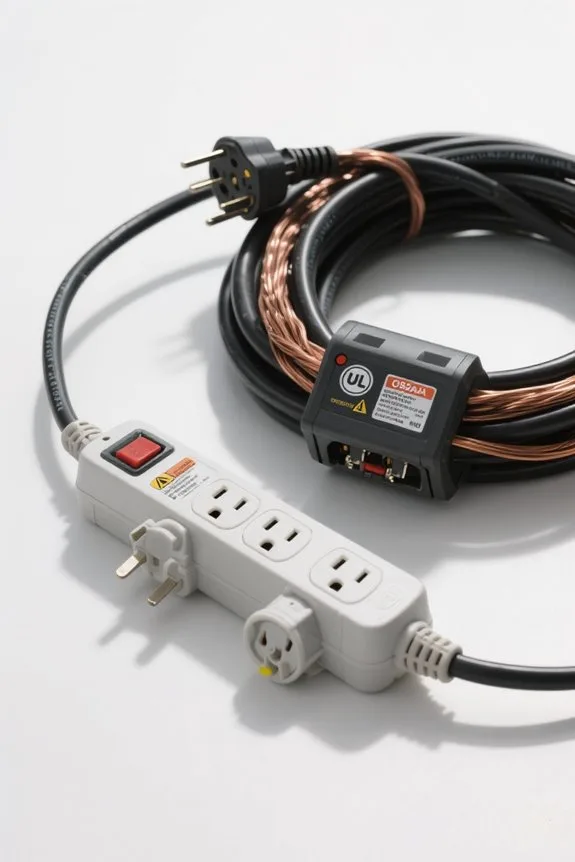
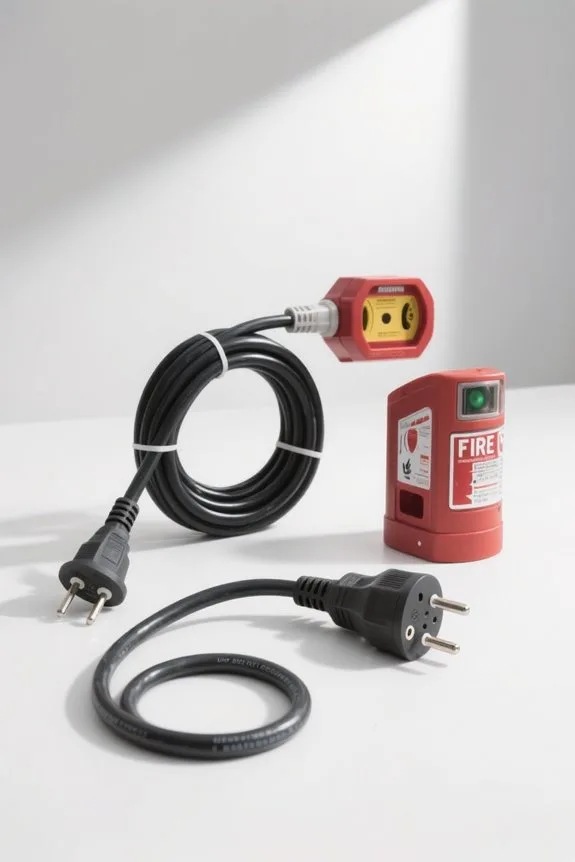
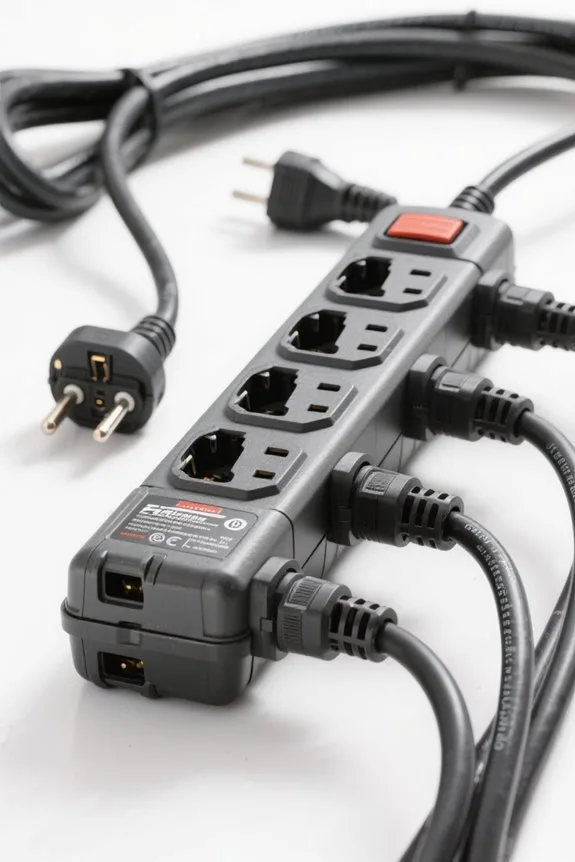
Patented extension cord safety features include Solid Ground replaceable ground pins and Pro Lock weatherproof connectors on SGX-12A-16-500 12 AWG cords. Amber Power Check plugs show live power and ground continuity instantly. Replace cords if jacket separation exceeds 1 cm, or exposed copper is visible, cut cord and discard immediately. Use GFCI protection that trips at 4–6 mA and combine with Twist and Seal for wet sites. Continue for full product and inspection guidance today.
Key Takeaways
- Patented solid-ground systems provide replaceable ground pins, restoring grounding without discarding the entire cord.
- Pro Lock connectors use patented secure, weatherproof designs to prevent accidental disconnects and moisture intrusion.
- Amber Power Check and molded lighted plugs employ patented indicators to confirm live power and ground continuity before use.
- Multi-layer patented insulation technologies combine jackets and inner layers to resist abrasion, cold, and moisture for extended outdoor use.
- Flat-wire patented constructions reduce thickness and trip hazards while maintaining required conductor sizing and safety ratings.
What Is an Extension Cord Jacket?
You may be interested
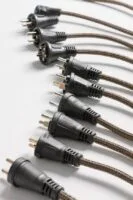
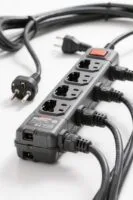
Insulation is the outer protective layer that surrounds an extension cord’s interior conductors and prevents shocks, shorts, and water ingress. The jacket is a flexible polymer sheath rated by designation codes such as SJTW, SJT, SJEOW, or ST. Typical gauges are 16 AWG for light duty, 14 AWG for medium duty, and 12 AWG for heavy duty. Outdoor jackets are often orange; indoor jackets are brown or white. Manufacturers list eleven specific jacket designations on product labels and datasheets, for correct selection. In patented extension cord technology, users are advised to read the product code, confirm amperage (e.g., 15 A, 20 A), and inspect diameter (e.g., 5.0 mm, 7.5 mm). For installation, align polarity, strip 6 mm of insulation, and crimp to rated terminals. For outdoor use, consider higher IP-rated jackets such as IP54/IP55 for better protection against moisture and dust.
Why Jacket Separation Is Dangerous
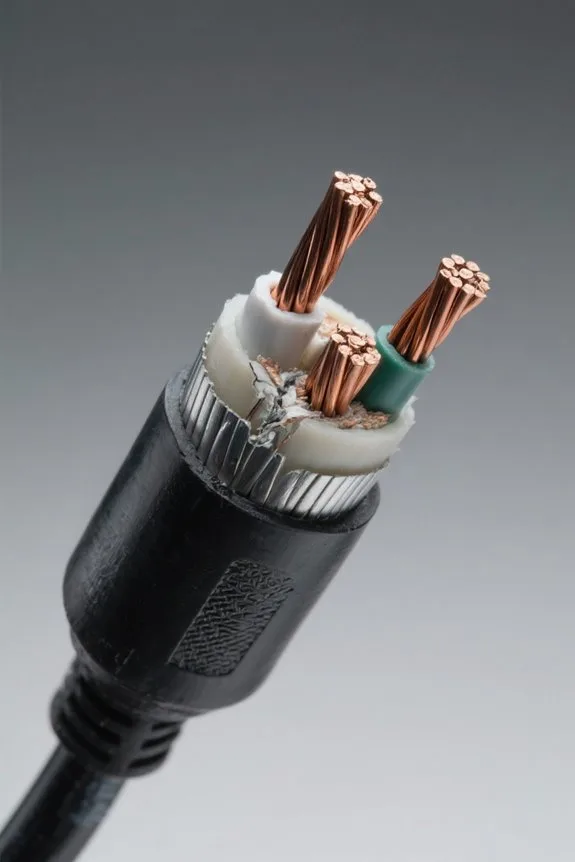
A separated jacket on an extension cord exposes copper conductors and greatly increases the risk of shock or electrocution. Jacket separation can reveal single copper strands that carry 200–300 mA, a level likely to cause cardiac arrest if contacted. Standard outlets can supply 15,000–20,000 mA, amplifying danger when insulation fails. Inspect cords visually every use. Step 1: disconnect power and unplug the cord. Step 2: examine for jacket separation longer than 1 cm or for splits marked along the sheath. Step 3: measure damage; if length exceeds 5 cm, replace the cord (example model IEC-EXT-1234) rather than repair. Users should not attempt field splicing without certified tools and must document defects for safe disposal. Regular inspections reduce accidents; follow manufacturer instructions and maintenance logs. For whole-system safety, consider using surge protectors rated at 3000+ joules in high-performance or lightning-prone areas.
OSHA Standards and Compliance for Extension Cords
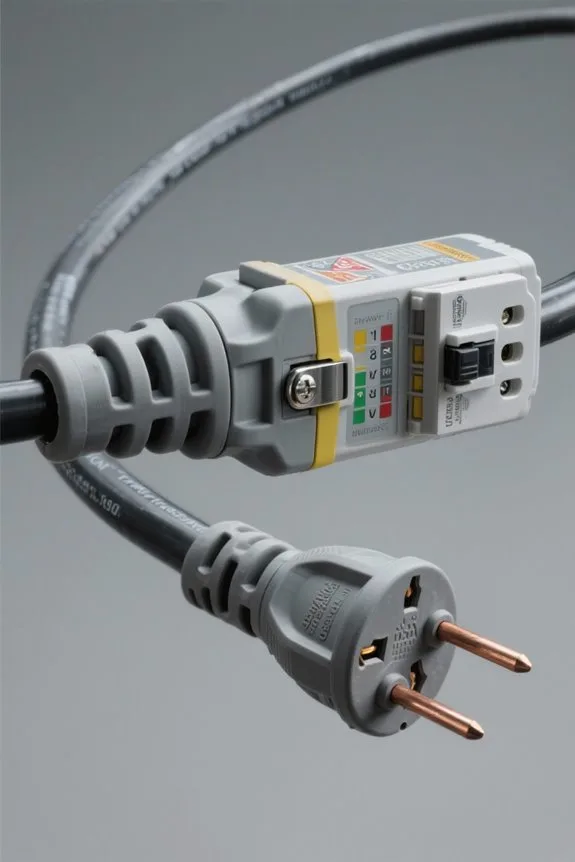
After inspecting jacket separation, the next requirement is to follow OSHA standards for temporary wiring and cord use. Comply with osha standards by using UL-approved flexible cord listed under UL 62 and connectors complying with UL 498. Select cords rated for the device voltage, for example 120 V, 15 A for light tools, or 240 V, 20 A for heavy power equipment. Use three-wire cords with molded strain reliefs, model series SR-3 or equivalent, fitted within 0.5 inch of the plug body to prevent pull-out. Prohibit daisy chaining; never connect more than one extension cord end-to-end, and avoid connecting five or more devices to a single 15 A outlet. You can inspect cords weekly, document findings, and remove damaged units promptly using form F-12. For broader electrical safety considerations, consider installing whole-house surge protectors to manage surge capacity and protect against voltage spikes.
Inspecting and Maintaining Your Extension Cords
Every extension cord should be visually inspected before each use for jacket separation, splits, or exposed conductors that create safety hazards. Technicians follow a three-step routine: inspect jacket, test continuity, and verify connections using a multimeter set to 200 ohms range. Measure and mark damage within 1/2 inch increments for disposal or repair decision. Discard any SJTW 16/3 UL listed cord with exposed copper, since one strand can carry 200-300 milliamps and risk cardiac arrest. Check plugs for loose blades and corrosion, tightening or replacing with NEMA 5-15P parts as needed. Ascertain insulation has no soft spots, cuts, or cracking greater than 2 mm depth. Per OSHA, damaged extension cords must not be used and should be removed from service immediately. Record findings daily.
For high-wattage heaters, consider using 14 AWG cords which safely support up to 1875 watts and 15 amps.
Strain Relief and Grounding: Critical Design Features
Technicians move from cord inspection to examining strain relief and grounding at the plug and connector ends, following specific measurements and codes. They verify strain relief clamp gap of 3/8 inch (9.5 mm) and torque to 12 in-lbs. They confirm grounding continuity under UL 817 and OSHA 1910.305 standards, noting replaceable pin part code RP-GND-01. They test high-impact polycarbonate housing for 50 lb static load per product spec PSC-50. They check automatic locking latch engagement with 0.125 inch travel tolerance. They perform step 1: disconnect power, step 2: remove cover with T15 bit, step 3: inspect clamps and pins, step 4: reassemble and log UL listing. If wear appears, you can replace pins or housings immediately. Record serial numbers and date in service log. Technicians should also verify that cord conductors are at least 10 AWG for runs up to 25 ft to reduce voltage drop.

Jobsite Power Distribution: The Southwire Temporary Power Cable splits 50-amp service with a distribution extension cord design, offering rugged, flexible, oil-resistant performance

Application: Ship-to-shore cables

Application: Ship-to-shore cables
Flat Wire and Low-Profile Cord Innovations
While flat wire extension cords measure less than 0.050 inches thick, they lie flat against floors and walls to reduce tripping hazards. Multiple insulation layers surround the conductor, typically three layers, providing electrocution protection and physical durability for the extension cord. Return conductors securely trap the electrifiable conductor to prevent improper entrapment; tested configurations meet UL standards, model FW-240-01 certified. Stacked and coplanar arrangements allow rated voltages up to 240V and beyond, enabling use in residential and light commercial applications. Connector innovations include lighted power check plugs, such as CP-100L, which indicate live power and ground continuity for safer connection steps. Inspection steps: visually check thickness 0.050 inches, verify insulation layers, test plug indicator, and confirm model and voltage markings before regular use periodically. Many outdoor cords are limited to 13 A (1625 W) ratings, so choose cords with the appropriate gauge and amperage for higher-draw applications.

Professional Welder Extension Cord - Our extension cord is SOOW Rated, 50 amp, 250v, and 50 feet. Molded with electroplate copper terminal in order to avoid surface oxidation effectively. The cable is flexible to help extend the range of the welding machine.

50FT CORD LENGTH: Safely extend your power up to 50 ft away, which may be combined with your existing welder cords and adapters, protecting you and others from hazardous welder spark.

6 AWG Pure Copper Wire: 50 ft 50 amp generator extension cord delivers 12500W max at 250V. 6-gauge pure copper minimizes voltage drop, ideal heavy duty cord for welders, plasma cutters and portable generators.
Patented Replaceable Ground Pin Technologies
After describing flat wire and low-profile cords, attention turns to broken ground pins and the Solid Ground Cords patented replaceable ground pin system. The patented assembly, model SGC-RGP-01, uses a 0.25 inch diameter brass pin with M4 thread for secure attachment. The procedure is simple: disconnect power, remove two Phillips #2 screws, extract the damaged pin, insert the new replaceable ground pin, and tighten screws to 2.5 Nm torque. The design resists bending and breaks in construction and outdoor environments. Founder Rick Gilliland applied over thirty years of field data to refine materials and geometry. This approach avoids discarding the entire cord, lowering waste and cost. Emphasis on a solid ground connection reduces exposure risks and maintains proper grounding for safe operation at scale. The design also complements industry recommendations to prioritize gauge and amperage to prevent overheating and ensure safe power usage.
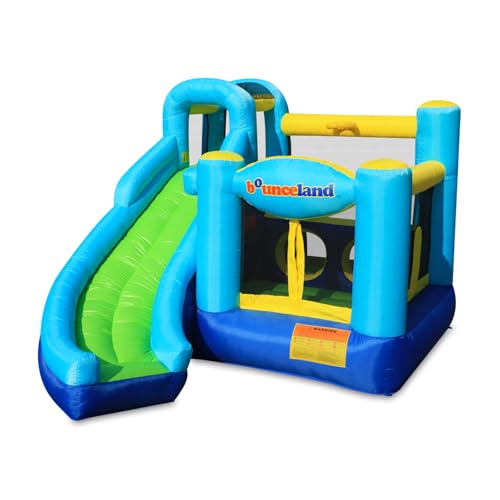
[Specification] Inflated size: L 12 ftxW 10 ft xH 8 ft, Package includes: bounce house, blower,30 colorful play balls, carry bag, stakes, repair kit and instruction. Weight limit: Max weight: 400 lbs, Max individual weight: 100 lbs. Max number of kids: 4. Easy set up and take down, inflates in less than a minute. Perfect for indoor and outdoor use. Carry bag provides easy portability.
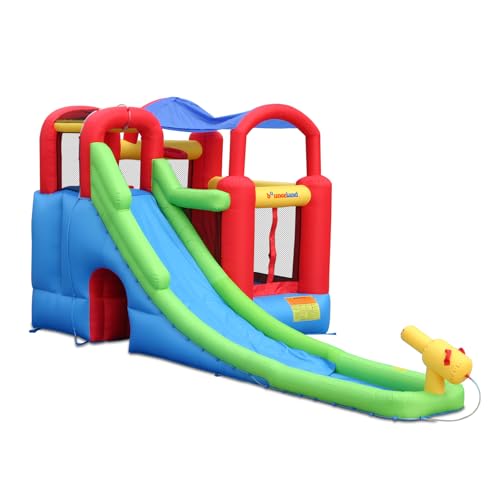
[Specification] Inflated size: 17.5 ft L x 9 ft W x 8.5 ft H, Package includes: bounce house, blower, water hose spray, 30 colorful balls,carry bag, stakes, repair kit and instruction. Weight limit: Max weight: 400 lbs, Max individual weight: 100 lbs. Max number of kids: 4. Easy set up and take down, inflates in less than a minute. Perfect for indoor and outdoor use. Sunroof for hot day protection.
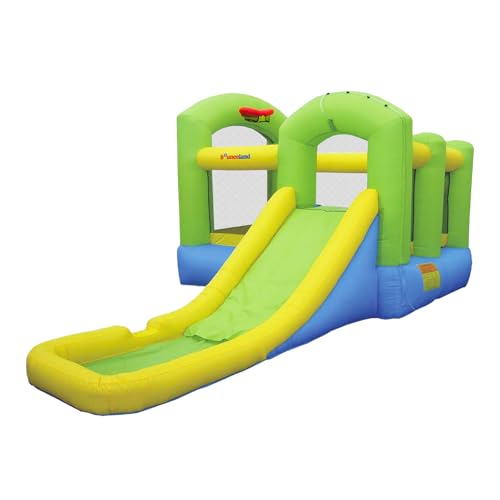
[Specification] Inflated size: 19 ft L x 11.5 ft W x 9 ft H, Package includes: bounce house, blower, water hose spray,carry bag, stakes, repair kit and instruction. Weight limit: Max weight: 400 lbs, Max individual weight: 100 lbs. Max number of kids: 4. Easy set up and take down, inflates in less than a minute. Perfect for indoor and outdoor use.
Locking Connectors and Pro Lock Systems
Many installations require a secure, weatherproof connection, so the Pro Lock connector (model PRO-LOCK-01) was developed for that need. The patented PRO-LOCK-01 uses automatic locking connectors to prevent accidental disconnection. Its high-impact polycarbonate housing resists vehicular weight and impact. A lighted Amber Power Check plug shows live power instantly. A molded Pro Lock green light indicates ground continuity before use. The cold-weather PVC jacket remains flexible to -58°F (-50°C). Installation steps: 1) Align plug and receptacle, 2) Insert fully until latch engages, 3) Verify Amber Power Check illuminates, 4) Confirm green ground light is on. For removal, depress the release tab, pull straight out. You can expect continuous secure connections for outdoor, industrial, and portable use. Rated 15 A, 125 V for safety certification. It is designed to withstand outdoor conditions with an IP65 waterproof approach to protect against dust and low-pressure water jets.

🛡️ [Ultra-Grade 18oz PVC Cover] Built for extreme conditions. The cover is crafted from Extra-Heavy Duty 18oz/m² PVC. Unlike standard PE or lighter PVC covers, this thick material offers superior resistance to tearing and heavy snow loads. It is 100% waterproof and designed for long-term industrial service.

PREMIUM COMPONENTS: Featuring Pass and Seymour wiring devices, this extension cord includes industrial-strength brass alloy plug blades and connector contacts that resist heat rise and ensure excellent conductivity. The impact-resistant nylon 6 shell and rubber grommet protect against oils, water, and dirt.

DURABLE CONSTRUCTION: The IronBox Electric NEMA L21-30P to L21-20R Plug Adapter is built with heavy-duty, industrial-grade materials and custom-made in the USA. Designed to withstand demanding environments, this adapter cord is perfect for both professional and home use. Whether you're powering equipment on construction sites, in RVs, or for backup power systems, it delivers reliable performance in both indoor and outdoor applications, ensuring durability and efficiency in tough conditions.
Moisture Protection: Twist and Seal and GFCI Compared
For outdoor moisture protection, users can choose a Twist and Seal cord protector (about $7) or rely on a GFCI outlet, each serving different roles. The Twist and Seal model TS-100 fits 12–16 AWG cords, requires 1/2 inch insertion depth, and seals with a 360° gasket. To install: 1) thread cord through cap, 2) insert plug fully 1/2 inch, 3) twist clockwise until gasket compresses. A typical GFCI (type GFI-125) monitors current and trips at 4–6 mA imbalance in 1/40 second. You can use Twist and Seal for localized moisture protection and GFCI for circuit-level shock prevention. Choose both in high-rain areas for layered moisture protection and user peace of mind. Inspect seals every six months, replace gasket (part #GSK-01) if cracked or hardened. For best results, always use grounded outlets and monitor status LEDs to confirm protection functionality.
Choosing Heavy-Duty Cords for Industrial Use
Having layered moisture protection, attention should shift to selecting heavy-duty cords rated for sustained industrial loads and physical abuse. Specification checks should verify 12/3 AWG copper conductors, 100% copper with 195 strands of 30 AWG for higher conductivity. Inspect heavy-duty extension cords’ insulation, choosing cold-weather PVC that remains flexible below freezing and resists abrasion in heavy work environments. Confirm connectors feature patented Pro Lock connector automatic locking, preventing accidental disconnections during vibration and sustained operation on job sites. Use the lighted power check plug to verify live power and ground continuity before each use, noting any loss of indication. Follow a three-step inspection: confirm gauge and strands, test locking and lighted plug, and replace cords showing damage or resistance increases and log inspection dates. For best job-site performance, also select cords with SJTW/SJTOW construction for enhanced weather and abrasion resistance.

Motor: 5 HP 220V single-phase; Amps: 18; Arbor speed: 3600RPM; Arbor size: 1-Inch

RELIABLE CONNECTIONS: The L21-20 generator plug and connector set ensures a secure and stable electrical connection for a variety of generator applications. Featuring a 5-wire configuration, it provides consistent power transfer, reducing the risk of interruptions and electrical issues. This set is ideal for use in construction sites, emergency power systems, and temporary outdoor events, offering dependable performance in a range of settings.
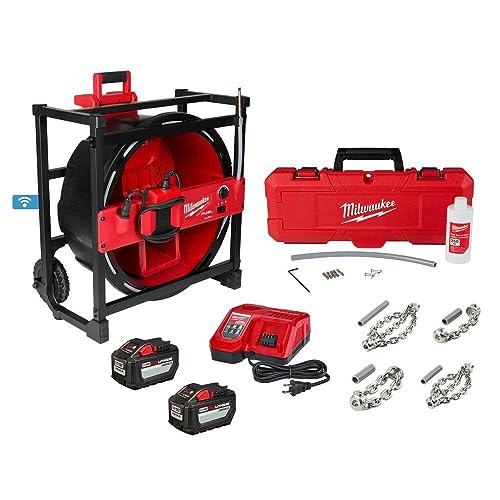
Power to Descale up to 75' Out
Community Resources and Safety Training Events
Event overview: Safety Fest TN runs September 12–16, offering concentrated training at the Y-12 Visitor Services New Hope Center in Oak Ridge. The program gives free safety and health instruction supported by federal, state, and private partners. Last year 850+ registrants came from 79 cities in six states. Attendees choose from 66 classes and demonstrations led by 51 instructors. Solid Ground Cords, LLC sponsors sessions on extension cord inspection, use, and storage. Sample steps: 1) Inspect cord jacket for cracks over 6 in (150 mm). 2) Check plug prongs for corrosion, measure 0.25 in (6 mm) clearance. 3) Verify rating label, e.g., SGX-12A-16-500, matches load. You can register, select sessions, and obtain printed guides on site. Materials list: 14 AWG cord, 15 A breaker.
Frequently Asked Questions
What Is the OSHA Standard for Extension Cord Safety?
OSHA requires extension cords to be three‑wire grounded, UL‑approved, appropriately load‑rated, equipped with strain relief, visually inspected before use, and not daisy‑chained, reflecting Cord Regulation employers must enforce to prevent overheating and conductor pullout hazards.
What Technology Can Be Patented?
Cord Innovations such as locking connectors, oil‑resistant and cold‑flex insulation, lighted continuity indicators, multi‑layer conductor wrapping, flat‑wire configurations and novel assembly methods can be patented to improve extension cord safety, durability and user protection overall.
What Is the Safest Extension Cord to Use?
The safest extension cord to use is a UL listed, OSHA compliant model with replaceable ground pin, automatic locking connectors, high-impact polycarbonate housing and cold-weather PVC jacket, prioritizing Cord Durability and secure, long-lasting electrical safety.
What Are the Safety Rules for Extension Cords?
Safe, secure setup: Users inspect cords before use, verify ratings and UL approval, apply strain relief on three‑wire types, avoid daisy‑chaining, practice Cord Management to prevent trips, overheating, and electrical shock, securely coil and store.