As an Amazon Associate, we earn from qualifying purchases. Some links on this site are affiliate links at no extra cost to you. Our recommendations are based on thorough research and editorial judgment.

Extension Utility Items and Electrical Code Compliance

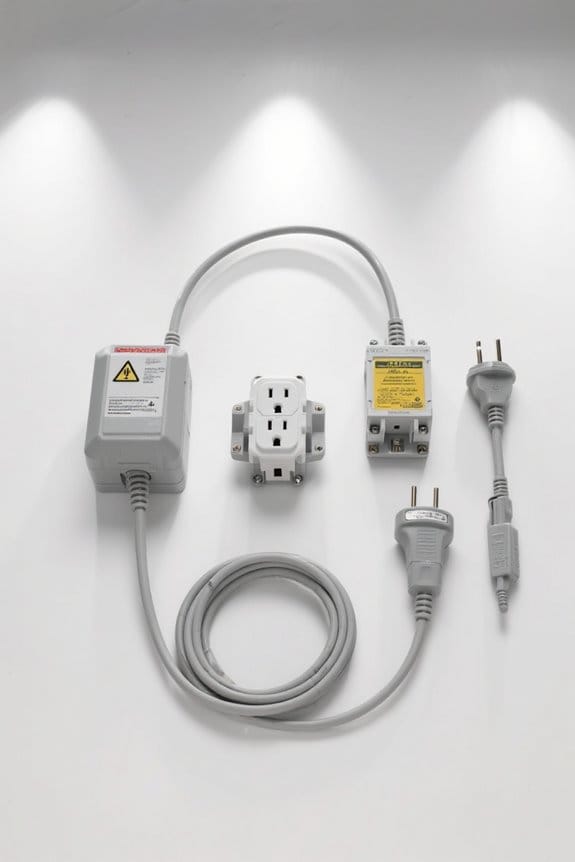
Extension utility items must meet NEC and UL standards. Use UL 1449 power strips with 15 A internal protection. Use extension cords rated SJT or SJTW, minimum 16 AWG, grounded and double insulated. Limit temporary use to 90 days; do not run cords through walls, ceilings, or floors. Keep light‑duty cords under 100 feet and medium‑duty under 50 feet. You can inspect cords every three months, remove damaged items, and learn additional compliance steps ahead.
Key Takeaways
- Extension cords and power strips are for temporary use only—NEC limits portable cords to 90 days before permanent wiring is required.
- Select UL-listed cords/power strips with proper jacket type (e.g., SJTW), correct AWG gauge, grounding, and nameplate ratings for your load.
- Never daisy-chain cords or strips, and do not exceed the combined wattage or the device’s overcurrent rating.
- Inspect cords and strips regularly (visual every 3 months, power strips every 6 months), document findings, and remove damaged items immediately.
- For long-term needs, install permanent outlets, GFCIs, or floor boxes using a licensed electrician to meet code and reduce fire risk.
Regulations and Code References for Extension Utility Items
You may be interested
Because extension cords and power strips pose fire and shock hazards, they are regulated under the National Electrical Code (NEC) and OSHA. The National Electrical Code classifies extension cords as temporary wiring for short-term use, not wiring. Under the Kansas Fire Prevention Code and NEC 2018 limit extension cord use to 90 days. You can select cords that are at least 16 gauge, double insulated, and grounded for safety. Keep maximum lengths to 100 feet for light-duty and 50 feet for medium-duty applications. OSHA regulations and the National Electrical Code prohibit daisy chaining power strips or cords because it increases fire and overload hazards. Inspect cords for damage, avoid running them under carpets, and remove any cord showing wear or exposed conductors immediately. Consider power stations with LiFePO4 batteries for improved safety and longevity.
Power Strips: Standards, Listings, and Selection Criteria

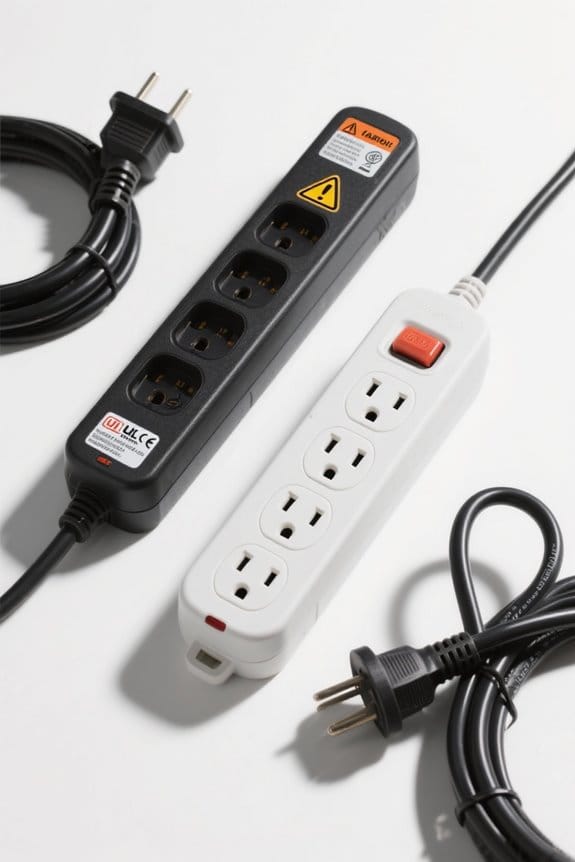
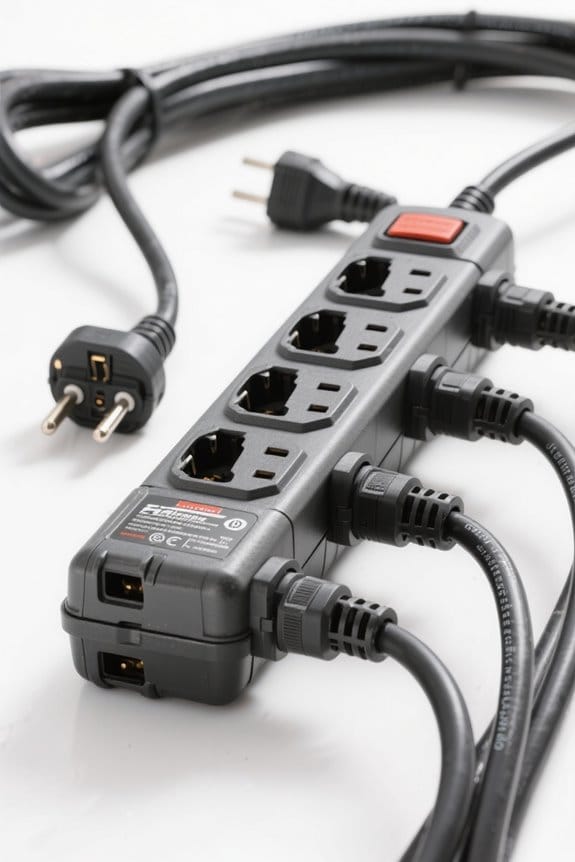
Power strips must be selected and installed to meet UL 1449 listing and to prevent overloads and fire risks. A listed strip labeled 15 A, 125 V, or marked “UL 1449” guarantees compliance. Selection requires an overcurrent device such as an internal circuit breaker rated at 15 A. The combined wattage of attached appliances must not exceed the strip’s nameplate rating, for example 1875 W at 125 V. Relocatable power taps are for temporary use only and must match device voltage and wattage. Daisy chaining of power strips is prohibited; each strip plugs directly into a wall receptacle. Inspect for cuts, exposed conductors, or loose sockets every 6 months. Do not place strips under carpets or inside walls, to maintain electrical safety and compliance. Additionally, select replacement cords rated 14 AWG or lower to minimize voltage drop and ensure safe operation.

Designed to provide enhanced EMI/RFI filtering

RACKMOUNT ISOBAR SURGE PROTECTOR: Rack-mount surge strip helps protect Audio/Video, IT hardware, and other electronics from dangerous surges & line noise. Features 12 outlets in exclusive isolated filter banks, 2 front 15A and 10 rear 20A outlets.

Extension Cords: Types, Gauges, and Ratings
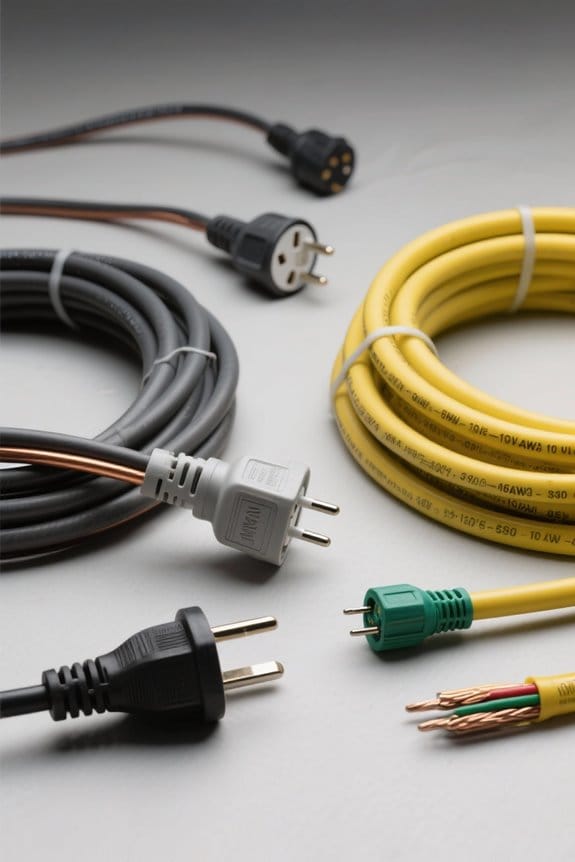
Several extension cord types are available, identified by jacket codes such as SJT, SJTW, SJEOW, or SJEOOW for specific uses. Article describes light-duty and heavy-duty cords, matching amperage and wattage to device needs. Cord gauge is measured in AWG; lower numbers like 16 AWG carry more current than 18 AWG. Cords must be double-insulated, grounded, and listed for hard or extra-hard usage, meeting construction and electrical standards. Select extension cords by length and gauge, calculate device amp draw and voltage drop, use table values and charted AWG ampacity. Inspect plugs, conductors, and jackets for damage before use. Follow manufacturer ratings and safety best practices when connecting electrical equipment, and replace cords that show wear or overheating. Personnel should store cords coiled, dry, and labeled. For outdoor and heavy-duty applications, choose cords with a jacket rated for moisture and temperature resistance and verify markings such as SJTW on the jacket.

HIGH-QUALITY CORD - The extension cord is made with thicker 16 AWG wire diameters which can handle more amperage, Get more from your heavy-duty 3-Prong extension cord with a high capacity of 1625 Watt rating (13 Amps, 125V). Link additional extension cords, power strips, surge protectors, plug adders, and devices up to a max of 1625W.

Extension Cord: The GoGreen Power (GG-13740WH-M) is a contractor grade 16/3 SJTW extension cord.

4-Way Mounting Loop
Temporary Use Limits and Permanent Wiring Prohibitions
Although intended for temporary use, extension cords must not remain connected longer than 90 days, as this constitutes permanent wiring. The article explains that the Electrical Code and OSHA require UL-listed extension products, rated for device amperage and voltage, with no daisy-chaining. Inspect cords for visible damage every 30 days; remove cords with cracks, exposed conductors, or heat distortion. Do not run temporary wiring through walls, ceilings, or floors. If power is needed beyond 90 days, install permanent branch circuits per NEC Article 400 and local code, using 12 AWG or 14 AWG conductors per load calculations. Failure to comply may cause fines or liability. Follow manufacturer datasheets and local authority having jurisdiction for final approval. Record inspections and dates to document compliance regularly. Additionally, consider using surge protection devices meeting the UL 1449 standard for added equipment safety.
Proper Installation, Routing, and Placement Practices
A cord installation should follow clear routing and placement rules to reduce shock, trip, and fire risks. Extension cords are for temporary safety use and must not exceed 90 days of continuous use. For proper installation, plug cords and power strips directly into wall receptacles and use UL 1449 listed products. Do not route cords through walls, ceilings, or floors. Do not cover cords with carpet or insulation. Avoid high-traffic areas; use a cord bridge when crossing walkways. Verify cord ampacity on the jacket and do not exceed rated capacity. Keep cords away from heat sources and water within 3 feet. Inspect cords for damage before each use. Label start and expected removal dates. Replace any cord with cracked insulation or exposed conductors immediately. Verify products are ETL or UL listed for safety certification.
Load Calculations, Continuous Vs Startup Current, and Ampacity
When calculating load, the installer must sum device wattages and compare the total to the cord or strip rating in amps. The technician performs load calculations by listing each device wattage, converting watts to amps with volts x amps = watts, and totaling results. For continuous vs startup current the installer identifies steady draw and brief surges, noting motor startup may be three to seven times running amperage. The guide specifies using cord or strip ampacity ratings, for example 15 A for typical household cords and 20 A for heavy-duty models. Step-by-step: record watts, divide by supply volts, add device amps, verify total stays below 80% for continuous loads. Label calculations and retain for code compliance verification. Include product codes and conductor sizes now. Use 16/3 or 14/3 outdoor-rated cords for tools up to 15 A.
Surge Protection, Grounding, and GFCI Requirements
Multiple devices require listed surge protection and proper grounding to prevent damage and shock during voltage spikes. The installer should use a UL 1449 listed surge protector with overcurrent protection rated for the circuit, for example 20 A, 120 V, Type 3. Grounding must follow equipment grounding conductor size AWG 12 for 20 A circuits and three-wire cord use for portable tools. GFCI outlets are required in wet locations, kitchens, and bathrooms, using devices that meet Class A trip thresholds. For portable extension cords, you can confirm a three-prong plug and continuity to ground. Test GFCI monthly by pressing the test and reset buttons. Document device model, rating, and installation date for code compliance. Label locations, include installer name, and retain manufacturer instructions safely. For reliable shutdowns and optimal UPS performance, keep total device draw under 80% load.

Leviton surge protective devices (SPDs) divert damaging voltage transients, or surges, away from electronic equipment

65kA Surge Current Rating

65kA Surge Current Rating
Inspection, Maintenance, and Damage Assessment Procedures
Every three months, inspectors should perform a visual and hands-on check of extension cords for damage, labeling the inspection date. Inspectors look for visible cuts, frays, exposed conductors, and connector discoloration near the plug blades. Use a 6-inch ruler to measure sheath gaps and record any gap over 3 mm. Check for warmth; connectors should not exceed 40°C during normal load. For maintenance, straighten kinks, remove twists, and avoid compression under 10 psi. Verify UL listing or equivalent, check product code markings such as “UL 62” and cord gauge like 16 AWG or 12 AWG for amperage needs. You can test continuity with a handheld multimeter set to ohms. Document findings, repair or remove defective cords, and ascertain ongoing compliance. Keep records two years. Ensure cords have temperature ratings from -40°F to +140°F.
Common Violations, Citations, and Penalty Implications
Following the inspection and maintenance procedures, the report addresses common violations, citations, and penalties tied to extension utility items. Inspectors note daisy chaining multiple power strips, common violations example, which breaches NEC Article 400 and increases fire risk to electrical installations. Extension cords used beyond 90 days are treated as permanent wiring under the Kansas Fire Prevention Code and can incur fines. Failure to use power strips with overcurrent protection, for example devices rated 15 A with built‑in 15 A breakers, attracts citations in safety inspections. OSHA citations for damaged or frayed cords can exceed $16,000 violation. Using cords beyond rated capacity or purpose may create personal liability exposure in incident claims. Corrective steps include removal, replacement with listed devices, a documented 30‑day audit. Inspectors should also verify that outdoor covers have appropriate IP54+ ratings when used in moist environments.
Safe Practices for High‑Amperage and Sensitive Equipment
When serving high‑amperage appliances, extension cords should never be used because they risk overheating and circuit overloads that cause fires. Prefer outdoor-rated cord types such as SJTW when using cords outdoors. The technician should use dedicated circuits per Electrical Code and document branch-circuit ratings of 20 A, 30 A, or 40 A as required. Sensitive equipment benefits from UPS systems rated to VA requirements, for example 1500 VA, model APC SM1500. Inspect extension cords and power strips monthly for frays, cuts, or exposed conductors. Verify cord ampacity markings such as 14 AWG for 15 A and 12 AWG for 20 A. Measure startup current with a clamp meter and confirm surge protector clamping voltage under 400 V. Records should show circuit IDs, device serials, and test dates. If damage exists, remove cord from service immediately.
Facility Solutions: Outlet Installation and Alternative Options
Facility managers should reduce cord use by adding wall or floor outlets placed to code, typically every 12 feet on continuous walls. Add outlets (eg, duplex 15A/20A, NEC 210.52 spacing) to limit extension cords and reduce trip hazards. Step 1: map loads, note device amperage. Step 2: plan outlet locations at 12 ft intervals or within 2 ft of doorways. Step 3: hire licensed electrician to install circuits, breakers, and GFCIs per local code. Consider floor boxes for open areas, or modular furniture with integrated outlets for desks. Use power strips rated for device transformers, avoid daisy chaining. Inspect the electrical system annually, test GFCIs quarterly, and label circuits for maintenance. You can order standard devices using NEMA 5-15R specifications. Document work and permits.
Seasonal and Holiday Lighting Safety Considerations
Because holiday lighting runs can create extended electrical exposure, NEC 590.3(B) limits installations using extension cords to 90 days to reduce fire hazards. The guideline requires GFCI-protected outdoor receptacles, NFPA 70 compliance, and UL-listed 16/3 or 14/3 extension cords rated for outdoor use. Inspect cords for frays, cuts, or exposed conductors before use. Do not daisy-chain cords or use power taps; plug lights directly into a single cord rated for the appliance load. Route cords away from walkways, secure every 3 ft with clips, and keep 6 inches clearance from snowplows. These steps improve electrical safety. When installing, you can test each string with a GFCI trip button, note load amperage, and label circuits with date and NEC 590.3(B) end date. Keep inspection records.

Whole House Power: The aXis ATS200 Whole House Automatic Transfer Switch provides managed power for your home with wi-fi setup and the ability to manage unlimited high demand loads using 4 priority levels

Seamless Power Transitions: Ensure uninterrupted power supply during outages with this 400 Amp Automatic Transfer Switch. Designed for use with single-phase generators, this transfer switch seamlessly transfers power from utility to generator

RELIABLE CONNECTIONS: The L21-20 generator plug and connector set ensures a secure and stable electrical connection for a variety of generator applications. Featuring a 5-wire configuration, it provides consistent power transfer, reducing the risk of interruptions and electrical issues. This set is ideal for use in construction sites, emergency power systems, and temporary outdoor events, offering dependable performance in a range of settings.
Frequently Asked Questions
Is an Extension Cord Considered Equipment?
Yes, an extension cord is considered equipment; its extension cord classification depends on intended use, adherence to electrical safety standards and proper usage guidelines, and it should be used temporarily, inspected regularly, and not overloaded.
What Are the Rules for Extension Cords?
Like a lifeline, extension cords require adherence to types of extension cords, safe usage guidelines, common extension cord hazards: use temporarily, correct gauge, double insulation, grounding, inspect for damage, avoid daisy-chaining or running through walls.
Are Employers Responsible for Verifying All Tool Plugs and Extension Cords?
Employers are responsible for verifying all tool plugs and extension cords to guarantee tool safety, mitigate employer liability, and maintain workplace compliance; periodic inspections, proper ratings and grounding are required to prevent hazards and fines.
What Are the OSHA Rules on Extension Cords?
OSHA requires extension cords be temporary, observe extension cord safety, voltage ratings and cord length limitations; once foreman likened a frayed cord to a ticking clock, cords must be inspected, grounded, and GFCI‑protected where damp.