As an Amazon Associate, we earn from qualifying purchases. Some links on this site are affiliate links at no extra cost to you. Our recommendations are based on thorough research and editorial judgment.

Differences Between Indoor Vs Outdoor Extension Items

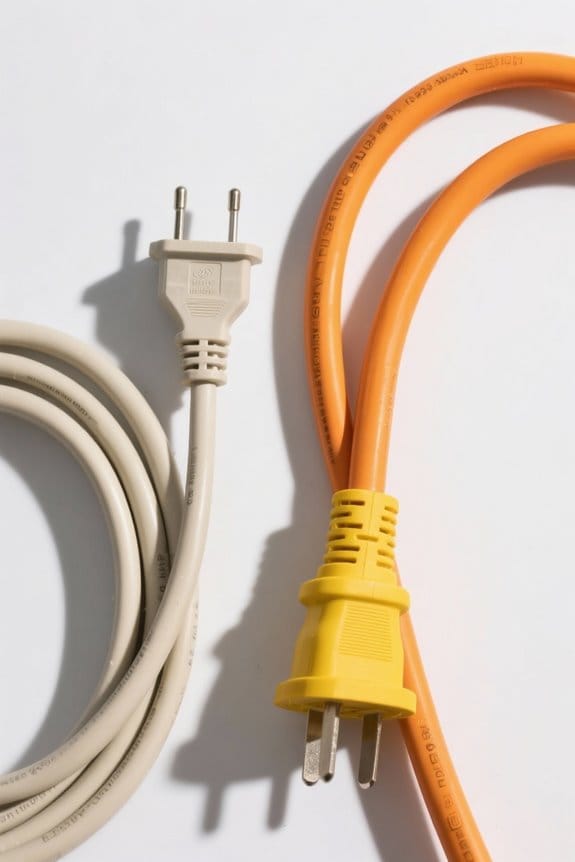
An outdoor cord uses 0.06–0.12-inch jackets, 12 AWG or 10 AWG conductors, SJTW/SJEOW-rated. Indoor cords typically have 0.03-inch jackets and 16 AWG. Plugs differ: outdoor cords use NEMA 5-15 three-prong plugs and need GFCI protection. You can check grounding with a multimeter, limit runs to the cord amp rating, use surge protection ≥600 J, and keep cords at least 3 feet from standing water. Continue for selection, inspection, and safe-use guidance and storage tips today.
Key Takeaways
- Outdoor extension cords have thicker, weather-resistant jackets (0.06–0.12″) and UV-resistant materials versus thinner indoor jackets (~0.03″).
- Outdoor cords use heavier gauge conductors (typically 10–12 AWG) to handle higher amperage and reduce voltage drop.
- Outdoor cords use grounded three-prong plugs and weatherproof markings (SJTW, SJEOW) while indoor cords often are two-prong and non-weatherproof.
- Use GFCI protection and surge-rated (600+ joules) outdoor cords to prevent shocks and transient damage in wet environments.
- Inspect, store, and roll outdoor cords properly; check for cracks, exposed wires, and grounding continuity before each use.
What Makes an Extension Cord Outdoor Rated?
You may be interested
Although many extension cords look similar, outdoor-rated cords have specific construction and markings that distinguish them for safe weather use. Outdoor extension cords are designed for outdoor use with thicker insulation and heavier gauge wire, often 12 AWG or 14 AWG, to carry higher amperage. Labels show a “W” or codes like SJTW, SJTOW, SJOOW indicating weather resistance and oil resistance. They include three-prong plugs with a grounding conductor to reduce shock risk in rain or snow. To inspect one, read the jacket marking, confirm 12 AWG or 14 AWG, and verify a “W” is present. To use safely, route away from puddles, disconnect before storage, and replace cords with cut or cracked jackets. Users can also verify manufacturer ratings and UL listings directly. Also look for an ETL/cETL listing and built-in GFCI or overload protection when possible for added safety.
Materials and Insulation Differences
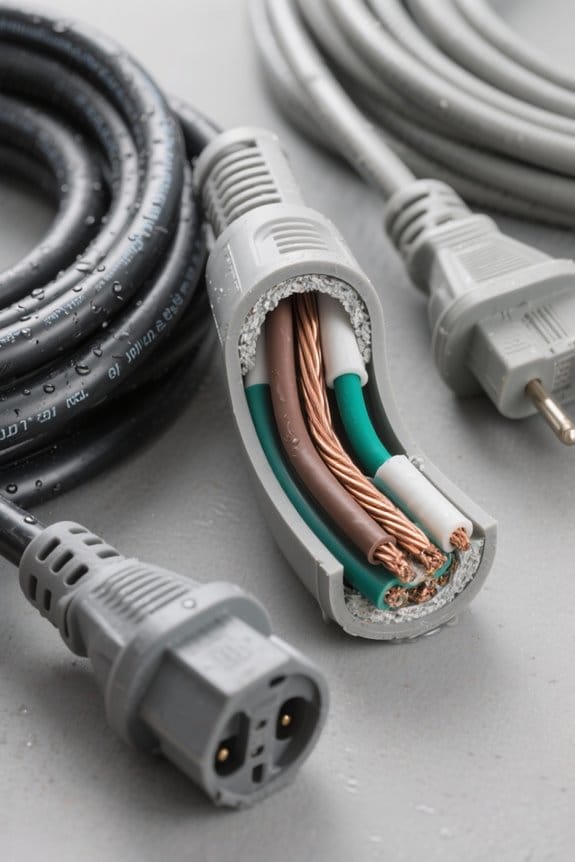
After confirming outdoor rating, attention turns to material and insulation differences that determine safety in wet conditions. Outdoor cords use heavy-duty vinyl or plastic outer jackets, often 0.06 to 0.12 inches thick, labeled SJTW, SJTOW, or SJOOW. Indoor extension cords lack such insulation, and have thinner jackets around 0.03 inches. For inspection you can: 1) read the cord marking for SJTW or SJOOW; 2) measure jacket thickness at a flex point with calipers. Use 16 AWG or 12 AWG as specified for device load. Materials provide UV and temperature protection, giving weather resistance for rain, snow, and sun. Indoor extension cords are not UV rated and will crack. Replace indoor cords with rated outdoor cords when using tools outside. Record serial codes and dates. Also verify the cord’s IP54/IP55 rating for enhanced protection in harsh outdoor environments.
Gauge, Amperage and Power Capacity
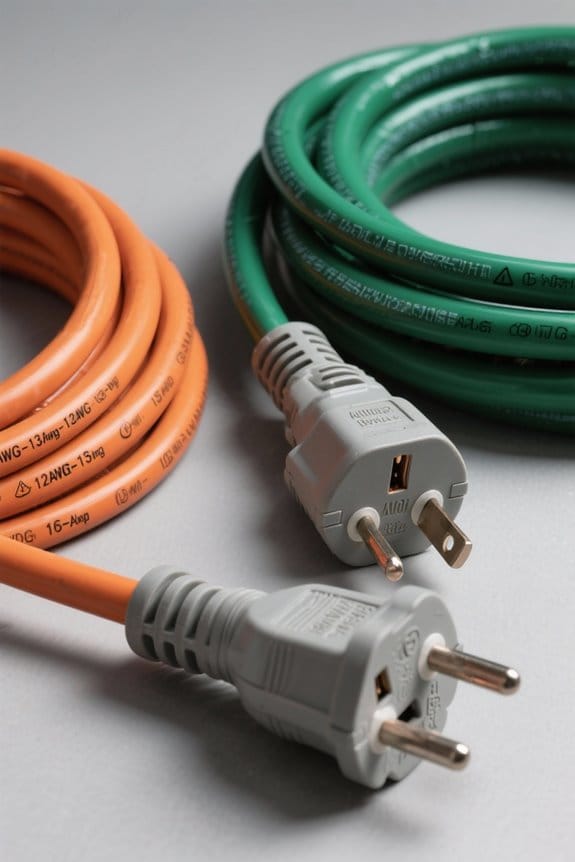
Gauge determines how much current a cord can carry, and it must match the tool’s amperage and the cord length. Outdoor extension cords often use 10 AWG or 12 AWG wire, while indoor cords commonly use 16 AWG. For 120V tools, calculate power: watts = volts × amperage; a 15A tool draws 1,800W. Never exceed the cord’s amperage rating; 16 AWG usually rated 13A, 12 AWG rated 20A, 10 AWG rated 30A. Step 1: identify tool amperage on label (example model X100, 15A). Step 2: choose matching gauge for length; for runs over 50 ft use 12 AWG minimum for 15A. Step 3: verify power capacity printed on the cord jacket. You can replace cords with correct gauge to prevent overheating and fire risk. Outdoor cords often feature SJTW/SJTOW jackets for improved resistance to water, UV, and abrasion.

Excellent resistance to oil and moisture. Excellent abrasion resistance. Ozone-, sunlight (UV)- and weather resistant.

This selection includes 250 Feet of 12/4 SJOOW cable.

Lighted End and Extra Size for Safety: The power socket indicator light shows that power is on and the heavy duty extension cord 500 ft is ready for work; Extra size Male NEMA 5-15P power plug and Female NEMA 5-15R power socket for safety; It has high insulation safety performance to prevent electric shock; ETL/cETL Listed for safe approval
Plug Types, Grounding and Prong Configurations
Identifying plug type helps guarantee safe connections when choosing extension cords for indoor or outdoor use. Indoor cords usually have two-prong NEMA 1-15 plugs, suited for 15 A, 120 V appliances; outdoor cords use three-prong NEMA 5-15 plugs with a grounding wire, marked W for weather resistance. Inspect labeled codes, for example SJTW or SJEOW, and confirm jacket ratings. Step 1: match plug types to outlet. Step 2: verify grounding wire continuity with a multimeter set to continuity, model Fluke 117 recommended. Step 3: check for W marking and absence of cracks. Outdoor three prongs route stray current to ground to reduce electrical shock risk in wet weather conditions. Avoid forcing mismatched plugs. Use compatible cords rated for amperage and inspect every six months. Also look for ETL or UL certifications to ensure compliance with safety standards.

RELIABLE CONNECTIONS: The L21-20 generator plug and connector set ensures a secure and stable electrical connection for a variety of generator applications. Featuring a 5-wire configuration, it provides consistent power transfer, reducing the risk of interruptions and electrical issues. This set is ideal for use in construction sites, emergency power systems, and temporary outdoor events, offering dependable performance in a range of settings.


50AMP Extension Cord: This extension cord is not only designed for extending RVs, Campers, and Trailer but also an ideal cord for EVs with NEMA 14-50 (Level 2) 240V charging, it takes 6-30 hours which is faster than charging with NEMA 5-15 (Level 1) 120V charging (4 days). Also handy for plugging in bigger outdoor items like a generator or wherever you need it. You should get this "Just in case" you encounter a charging site needing more than 100FT.
Length, Voltage Drop and Performance
For runs longer than 25 feet, one should select cord length and wire size to limit voltage drop and preserve device performance. Indoor extension cords normally cap at 25 feet, while outdoor extension cords reach 150 feet, model examples: 12 AWG (NEMA 5-15P to 5-15R) and 10 AWG (SJTW, code: SJTW-12, SJTW-10). Step 1: calculate total length in feet, Step 2: determine amperage load, Step 3: choose AWG to keep voltage drop under 3 percent. Longer length increases voltage drop and reduces performance; heavier gauge reduces heat and loss. Confirm cord amp rating equals or exceeds device draw to prevent overheating. Inspect connectors and label ratings before use. For example, a 100 ft 12 AWG cord carries 15 A with about 2 percent drop. For most compressors a 12-gauge cord is recommended for runs up to 50 feet to limit voltage drop and prevent overheating.
Weatherproofing, UV Resistance and Temperature Tolerance
Because outdoor extension cords use thicker jackets and sealed connectors, they resist moisture and continue operating safely in rain or snow. Outdoor products use protective insulation and thicker thermoplastic or rubber jackets for weatherproofing and abrasion resistance. Manufacturers mark cords SJTW, SJTOW or SJOOW to indicate oil, weather and outdoor use capability. Step 1: choose a cord rated for UV resistance if sun exposure is expected. Step 2: verify temperature tolerance range, commonly −40°C to 60°C (−40°F to 140°F) for many models. Step 3: inspect jackets for cracks before each use. Indoor cords lack these features and will degrade with moisture and heat. For safe outdoor use, select coded cords, confirm ratings, and store coils away from direct sunlight when not in use regularly. Always protect outdoor connections with a GFCI outlet to reduce the risk of shock where cords may be exposed to water.
GFCI, Surge Protection and Safety Features
While working outdoors, the user should protect equipment and people with both GFCI and surge protection to reduce shock and damage risks. GFCI devices detect irregular current and cut power within 20–30 ms. For 120V, 15A circuits use NEMA 5-15 rated GFCI outlets or a portable GFCI adapter marked UL 943. Surge protection modules rated for 600 joules or higher help absorb spikes from lightning or utility events. For outdoor extension cords select models with molded connectors, 12 or 14 AWG conductors, and IP44 or better enclosure ratings. Inspect cords for cuts, replace if insulation is damaged beyond 6 mm depth. Combine GFCI,surge protection,outdoor extension cords to lower electric shock and fire risk. Regular checks and clear safety features improve field safety and compliance. Also, confirm any outdoor cord carries ETL/UL certification to ensure it meets recognized safety standards.

Fast & Adjustable Charging: Up to 9.6 kW (37 mph), 7x faster than Level 1, with 5 current levels (16/20/24/32/40A) to match home capacity, plus 1–12H timing delay for off-peak charging, reducing costs and easing range anxiety

Outdoor Design: Our 100ft outdoor extension cord waterproof design can handle water, sun, abrasion, and cold. A reliable 3 prong extension cord 100 ft for tools, lights, generators and much more. *(Plugs are not submersible. Avoid pooling or running water at the connections.)
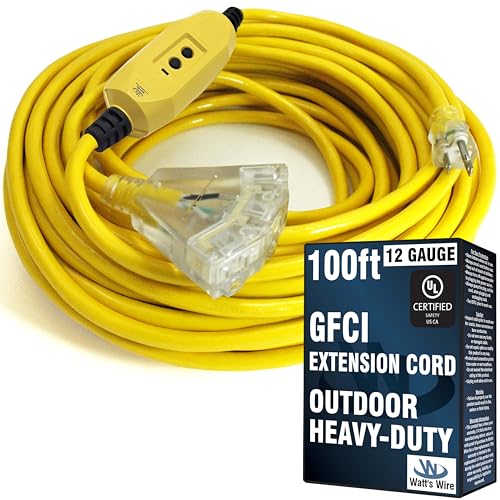
Outdoor Design: Our 100ft outdoor extension cord waterproof design can handle water, sun, abrasion, and cold. A reliable 3 prong extension cord 100 ft for tools, lights, generators and much more. *(Plugs are not submersible. Avoid pooling or running water at the connections.)
How to Identify Outdoor-Rated Cords
Although exposed to rain and UV, outdoor-rated cords are identified by clear markings and sturdy construction designed for weather resistance. For how to identify outdoor-rated cords, inspect the jacket for a stamped “W” and labels reading SJTW, SJTOW, or SJOOW, which indicate outdoor-rated extension cords. Check thickness: typical outdoor jackets measure 3 to 6 mm. Confirm three-prong plugs with grounding pins. Verify insulation to protect conductors, using rubber or thermoplastic elastomer rated for −40°C to 60°C. Look for abrasion-resistant outer jackets and UV-stable compounds. Measure cord diameter and read AWG; 14 AWG suits 15 A, 12 AWG suits 20 A. Test packaging for IP or NEMA ratings and manufacturer data sheet. Each step helps guarantee correct selection and safe outdoor performance. Also prioritize UV-resistant jackets and oil resistance to extend cord lifespan and reliability.

4-Way Mounting Loop

10 AWG 4 conductor wire that made by OFC (Oxygen Free Copper). OFC wire brings lower resistance and improved heat absorption, effectively improve the conductivity to carry more current.
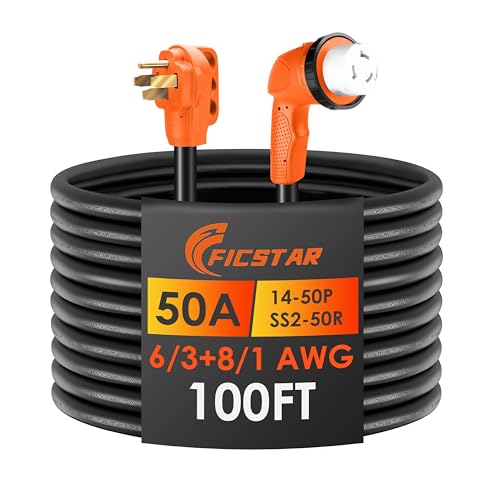
【50 Amp RV/Generator Cord 100ft】6/3+8/1 Gauge STW wire made of 100% copper coated with PVC to provide weather resistance, good conductivity, more flexible and necessary length to connect the campground or park power to your 50A RV.
Inspection, Maintenance and Repair Best Practices
When preparing for outdoor use, inspect extension cords for cracks, frays, discoloration, and damaged grounding pins before each operation. Technician performs inspection, measures cord diameter (6 mm minimum for 16 AWG), checks SJT marking. Clean plugs with a soft brush and 70% isopropyl, then dry connectors for 30 minutes. Roll cords into 18 cm loops, secure them, and store in a dry location to prevent kinks instead. Test both ends on a GFCI-protected outlet, apply 120 V for 10 seconds, note any significant difference, confirm continuity. For cords with significant damage, replace immediately; do not attempt splice repairs, document the cord product code and defect. Maintain a dated maintenance log entry with tester initials, action taken, and a 10-digit SKU or model number recorded. Ensure cords selected meet IP65 rating and appropriate gauge requirements for outdoor use.
Safe Usage Practices for Outdoor Cords
Every outdoor cord must be inspected before use for cracks, frays, discoloration, damaged grounding pins, and SJT marking compliance. You can inspect outdoor extension cords and extension cords for outdoor, checking 12 AWG or 14 AWG sizing and 15 A or 20 A ratings printed on the jacket. For safety, use GFCI protection at the outlet or with a portable GFCI adapter marked UL943. Keep cords elevated 4–6 inches off the ground and at least 3 feet from standing water. To avoid overloading outdoor cords, total device amperage must not exceed cord rating; add device amps and compare to printed amp number. When finished, store outdoor extension cords properly by rolling into 12–18 inch loops, avoiding kinks, and keeping them in a dry container. Prefer outdoor-rated heavy-duty cords such as SJTW/SJTOW and at least 12 AWG for high-draw equipment to minimize voltage drop and overheating.
Selecting and Storing the Right Cord for the Job
How should one choose and store extension cords to guarantee safe outdoor use and long life? One must select an appropriate cord labeled with a “W” for weather resistance and UL or CSA certified cords, for example UL 817. Step 1: confirm the correct gauge; use 16 AWG for lamps and 10-12 AWG for air compressors and heaters. Step 2: inspect for frays, cracks, or damaged prongs before each use. Step 3: use GFCI outlets or GFCI adapter models GFI-125 when outdoors and wet. For storage, coil cords into 12-inch loops without twisting to avoid internal damage. Store in a cool, dry place at 40–70°F, away from sunlight. Replace any cord showing wear immediately. Label cords by circuit and length for quick identification always.

Up to 20% more fuel efficient than leading competitors, this 22-kilowatt generator provides 22,000 watts of continuous power on propane and 19,800 watts on natural gas, with no refueling, no manual operation, and no extension cords needed

Meets the following UL and CSA standards for Flexible Cords and Cables: UL62 and CSA C22.2 . SOOW stands for S = Service Cord, OO = Oil Resistant (both inside and outside insulation), W = Weather and Water Resistant.

HIGH-QUALITY CORD - The extension cord is made with thicker 16 AWG wire diameters which can handle more amperage, Get more from your heavy-duty 3-Prong extension cord with a high capacity of 1625 Watt rating (13 Amps, 125V). Link additional extension cords, power strips, surge protectors, plug adders, and devices up to a max of 1625W.
Frequently Asked Questions
How to Tell the Difference Between an Indoor and Outdoor Extension Cord?
One can tell the difference by checking labeling and features: Indoor usage clear marking, Outdoor durability indicators, Wire insulation thickness, Power ratings, and Weather resistance symbols, plus grounding prongs and brighter colors for outdoor cords.
Can I Use an Indoor Extension Outside?
No — like playing with fire, one avoids using indoor cords outdoors; they fail safety standards, lack weather resistance and cord insulation, impose usage limitations, and risk inadequate outdoor power handling, causing potential shocks or fires.
How to Tell if Your Extension Cord Can Be Used Outside?
One can check cord markings for outdoor safety ratings and weather resistance, confirm appropriate gauge sizes for appliance load, follow usage tips, and verify cord length suits placement to prevent hazards before outdoor power task.
Which Is Better, a 12 3 or 14 3 Extension Cord?
The 12/3 cord is better for high-demand devices; the 14/3 suits lighter use. Cord gauge comparison shows higher capacity, while extension cord ratings, material durability differences, electrical safety tips and power usage efficiency guide selection.