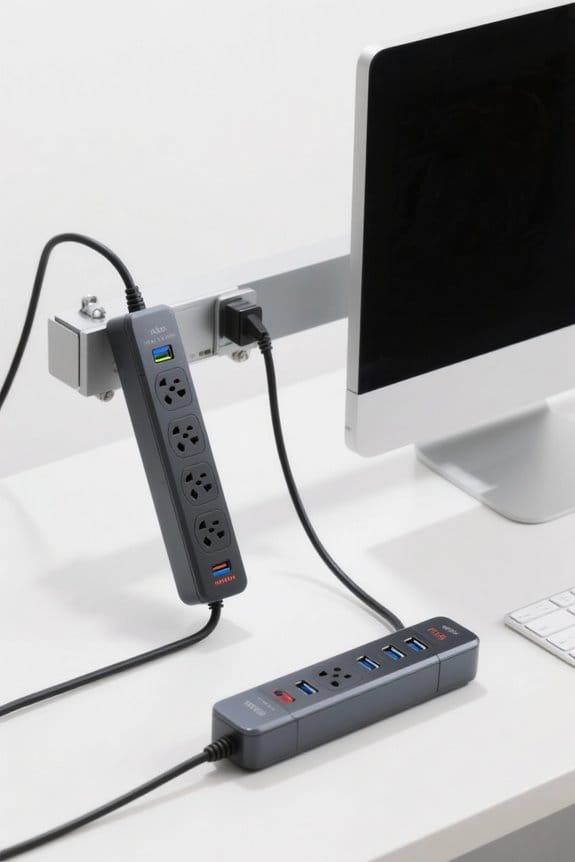
As an Amazon Associate, we earn from qualifying purchases. Some links on this site are affiliate links at no extra cost to you. Our recommendations are based on thorough research and editorial judgment.

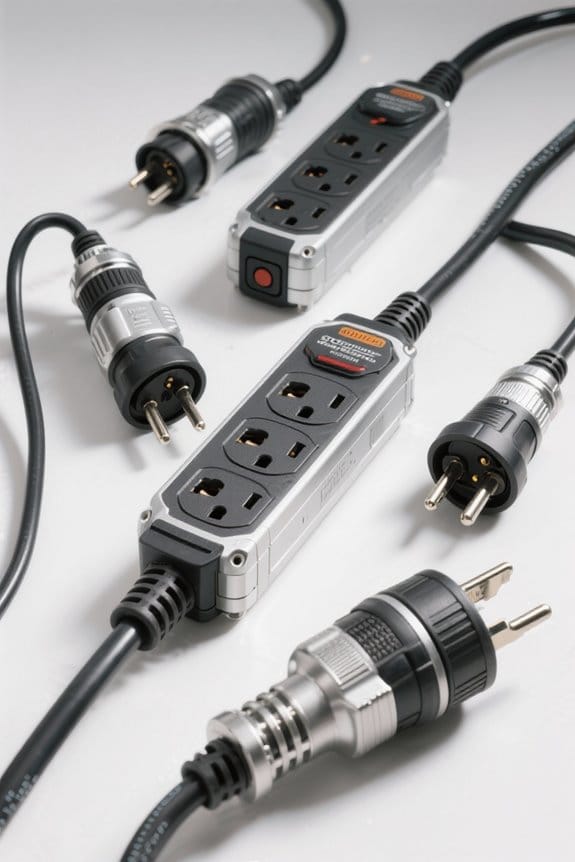
Benefits of Using Heavy-Duty Extension Utility Items

Heavy-duty extension cords like EX14-15 or PD-12-25 deliver steadier power to tools. Use 12/3 for 25–50 ft and 10/3 for longer 50–100 ft runs to reduce voltage drop. Match cord amperage to device rating, connect to a GFCI outlet, and inspect jacket and strain relief for cuts before each use. Choose SJTW or SJTOW jackets, UL 817 listing, and IP44 weatherproofing. You can store reels properly for safety, and further sections explain specifics and details.
Key Takeaways
- Deliver steadier power with thicker conductors (10 or 12 AWG), reducing voltage drop and preventing tool overheating over long runs.
- Support higher amperage tools safely by matching cord gauge and length to device current ratings (up to 20–30 A).
- Improve outdoor durability and safety with weatherproof jackets (TPE/SJTW), reinforced plugs, brass contacts, and IP44+ ratings.
- Reduce electrical hazards by using grounded three-prong cords, strain relief, and connecting to GFCI-protected outlets.
- Increase job-site efficiency through longer, reliable runs (10–100 ft) and fewer outages, minimizing downtime and extension needs.
Types of Heavy‑Duty Extension Utility Items
You may be interested


When selecting heavy-duty extension utility items, technicians should compare wire gauge, length, and grounding to match tool requirements. These heavy-duty extension cords include 14 AWG and 10 AWG cables rated for 15 A, product code EX14-15. Choose cord lengths of 10 ft, 25 ft, or 50 ft to maintain voltage and minimize voltage drop at tool inputs. For outdoor use, select jackets with weatherproof insulation rated for -20°C to 60°C and IP44 splash resistance, improving equipment longevity. Grounded plug configurations must be present; inspect grounding pin and strain relief before each use for electrical safety, always replace damaged cords regularly. To test overheating, run the tool at full load for 15 minutes, so you can measure cord temperature with a probe, confirm under 60°C. For added protection in AV setups, consider surge protectors with 1,000-1,500 joules to safeguard equipment from power spikes.
Recommended Products

Lighted End and Extra Size for Safety: The power socket indicator light shows that power is on and the heavy duty extension cord 25 ft is ready for work; Extra size male NEMA 5-15P power plug and female NEMA 5-15R power socket for safety; It is thicker and more durable than the normal type on market and has high insulation safety performance to prevent electric shock; ETL/cETL listed for safe approval
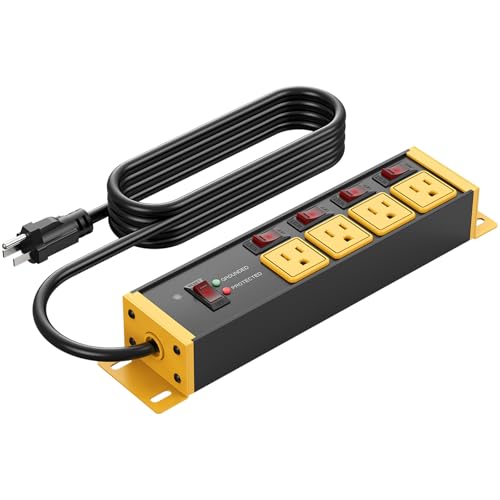
Heavy duty power strip 20 amp with 4 outlets and individual switches, 5-20R, 6-20R and come with standard 3 prong 5-15P plug. Wall mount design, can be applied to high power industrial equipment.
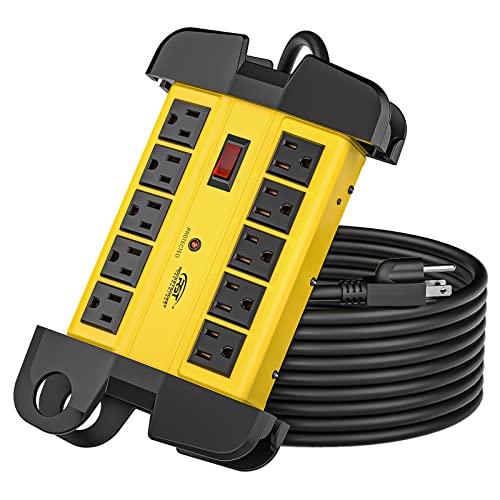
--Sturdy, extruded aluminum housing stands and Surge Protection constructed. CRST Industrial Power Strip is perfect for construction site, labs, and other harsh environments.
How Heavy‑Duty Cords Improve Workplace Efficiency
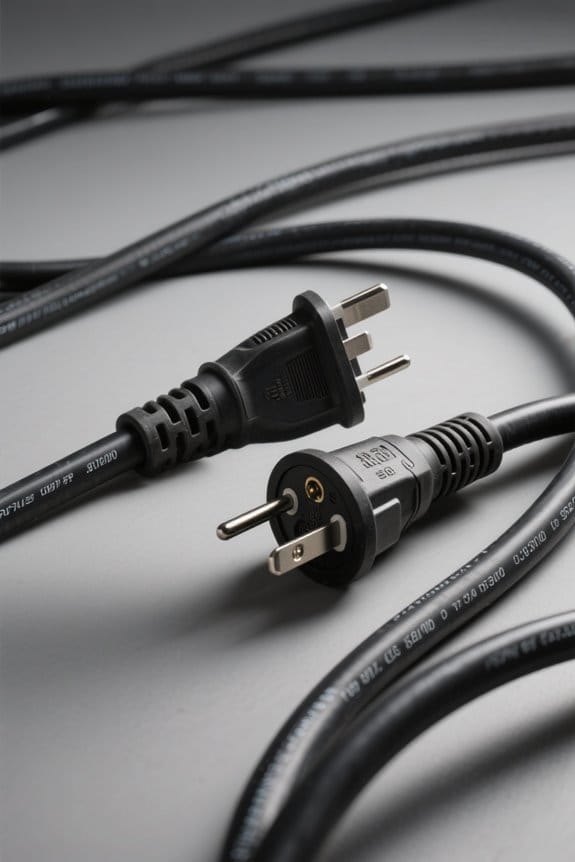
Although heavy-duty cords look similar to standard cords, their thicker 10 AWG or 14 AWG conductors rated for 15 A provide steadier power and less voltage drop. A heavy-duty extension cord with 10 AWG, 15 A, 12/3 configuration and UL Listing (e.g., UL-MP1234) supports tools to 100 ft without overheating. Workers can use outdoor-rated insulation (SJTW) for wet conditions. For step-by-step setup: 1) inspect jacket and grounded plug, 2) route cord away from traffic and sharp edges, 3) connect to GFCI-protected outlet. You can store coils on reels to prevent kinks. These practices improve workplace efficiency by reducing downtime and enhance safety and efficiency with tested, durable components. Record inspections weekly; replace damaged cords and note serials. Choose cords with SJTW jackets rated -40F to +140F and confirm they are UL Listed to ensure safe outdoor use.
Selecting the Right Gauge and Length for Your Equipment
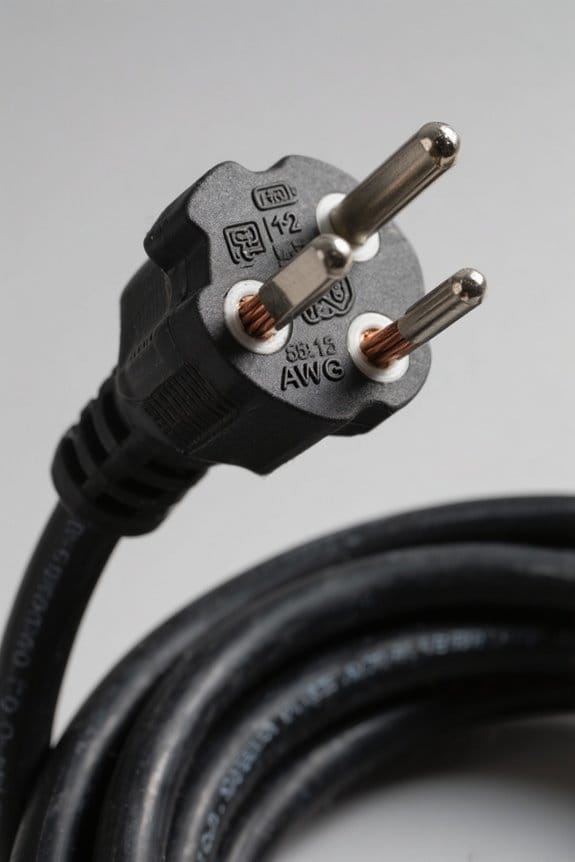
Many job sites require selecting the correct gauge and length to prevent voltage drop, overheating, and tool damage. Technicians note extension cords are designed to carry rated amperage, and a 12-gauge (AWG12) cord supports up to 20 amps at short distances. For 150-foot runs the same AWG12 capacity falls to 11–15 amps; consequently, selecting the appropriate gauge for distance is essential and safe. Calculate tool amperage by dividing wattage by 120 volts or 240 volts, then consult cord capacity tables and match the required amperage. Follow steps: list tool wattage, compute amperage, choose gauge and cord length with slight extra slack, avoid excessive slack and tripping. Record product code examples such as EC-12-50 for 12-gauge 50-foot and EC-10-150 for 10-gauge 150-foot models for ordering. For outdoor or damp areas, choose cords with IP65 weatherproof jackets to resist moisture and abrasion.
Recommended Products

High Quality: 12/3 extension cord 25 foot, 15 amp, 125 volt, 1875 watt, NEMA 5-15P to NEMA 5-15R, ETL/cETL listed; The 3 outlet extension cord outdoor has 3 way plug outdoor; Heavy duty extension cord with multiple outlets can power multiple appliances at the same time; Making maximum use of existing resources

ETL Listed and Trusted: 10 ft extension cord rated 13 Amps, 1625 Watts and 125 VAC; Male NEMA 5-15P and female NEMA 5-15R; It is ETL/cETL Listed; Ensuring its compliance with strict safety standards; Each outdoor extension cord passes a 2500V high voltage test before leaving the factory to ensure safety; Reliability and efficiency outdoor extension cord waterproof are capable of meeting most electrical needs; Please note that the “Indoor” label on the product is only a partial identifier; This product is actually safe for outdoor use as its external power cord is made of durable SJTW material; offering excellent outdoor abrasion resistance; moisture resistance and weather resistance

ETL Listed and Trusted: 15 ft extension cord rated 13 Amps, 1625 Watts and 125 VAC; Male NEMA 5-15P and female NEMA 5-15R; It is ETL/cETL Listed; when using it for the first time; if 15ft extension cord feels stiff; this is a normal phenomenon caused by the tight packaging during manufacturing; don't worry; simply lay it flat at room temperature; 15 foot extension cord will naturally regain its flexibility and lie flat after a short period
Weatherproofing and Durability Features to Look For
Because heavy-duty extension cords operate outdoors, they require weatherproof insulation, durable jackets, and reinforced plugs to stay safe and functional. The guide recommends 12/3 or 10/3 gauge for 25 ft or 50 ft runs to reduce voltage drop. Inspect labels for UL 817 or equivalent certification, model examples HDX-125 or PRO-10X, and rated amperage 15 A to 30 A. Step 1: verify weatherproof insulation with silicone or thermoplastic elastomer (TPE) jackets. Step 2: confirm reinforced plugs and brass contacts that resist corrosion. Step 3: check jacket thickness at least 2.5 mm and UV resistance ratings. This approach guarantees heavy-duty cords meet durability and performance expectations in harsh outdoor environments, and you can replace compromised units promptly. Inspect monthly, and document findings on maintenance log. For outdoor reliability, choose cords with SJTW ratings and ETL/UL listings for wet locations.
Recommended Products

ETL Listed and Trusted: 25 ft extension cord rated 13 Amps, 1625 Watts and 125 VAC; Male NEMA 5-15P and female NEMA 5-15R; It is ETL/cETL Listed; Ensuring its compliance with strict safety standards; Each outdoor extension cord passes a 2500V high voltage test before leaving the factory to ensure safety; Before use, please check the rated voltage, current, and power of the appliance to avoid exceeding 125V, 13A, and 1625W
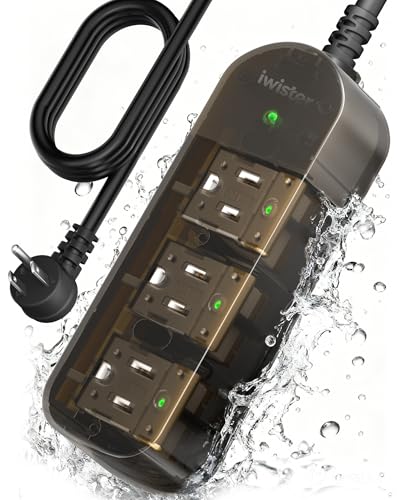
【1625W High-Power】Iwister outdoor power strip weatherproof includes 3 outlets, ideal for powering high-power devices. UL-certified high-quality copper wire ensures stable power and low heat. Suitable for various outdoor applications including electric lawn mowers, pressure washers, pool pumps, outdoor string lights, BBQ grills, and more. Note: No on/off switch included.
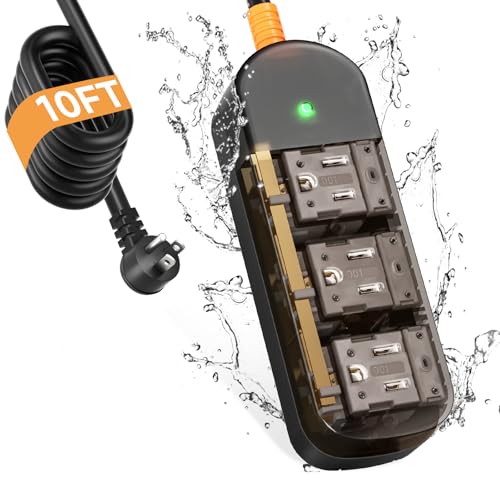
【Outdoor Power Strip Weatherproof】Our IPX6 waterproof power strip equipped 3 AC outlets with surge protector, rated 1625W/13A, works during water splash or thunderstorms, the back designed reroutes any liquid through, Perfectly for outdoor and home use. Durable and heat-resistant ABS+PC material made cover, while the UL-listed extension cord meets safety compliance standards.
Safety Best Practices for Heavy‑Duty Extension Use
Safety requires selecting a grounded three-prong heavy-duty cord, for example 12/3 HDX-125 or 10/3 PRO-10X, for 25–50 ft runs. The user should match cord amperage to device current, confirm ratings stamped on jacket before connection. For heavy loads, choose 12-gauge wire for runs up to 50 feet, or 10-gauge for longer, demanding circuits. Verify the cord’s amperage rating equals or exceeds the appliance draw, avoiding undersized cables that can overheat. Select cords labeled for outdoor use when exposed to moisture; confirm weatherproof insulation, UV resistance, jacket material. When connecting, fully insert the grounded plug into a compatible GFCI-protected outlet, avoiding loose or partially seated connections. Route heavy-duty extension cords to prevent trip hazards, keep them away from heat sources, and secure with approved clips. Also, prioritize cords with SJTW jackets for outdoor suitability and durability.
Detecting Damage and When to Replace Cords
One should inspect heavy‑duty extension cords before each use, checking for frayed wiring, torn insulation, and broken prongs along the entire 25–50 ft length. Begin a visual scan, then flex the cable to reveal hidden cuts, following step-by-step checks listed below for visible faults. Step 1: inspect plug ends for looseness or corrosion; tug gently, look for slack connections and floppy cables, detecting damage. Step 2: use a non-contact voltage tester model NT-300 to confirm de-energized status before removing any damaged extension cords immediately. If a cord feels warm during use, stop immediately, mark HD-EXT-50G if present, and replace cords without delay as required. Discard or recycle damaged units immediately, document replacement date and serial numbers, record product codes for future compliance audits regularly. For longer runs, consider using a 12-gauge cord to minimize voltage drop.
Benefits of Retractable Cord Reels and Storage Solutions
After removing damaged extension cords, many workshops install retractable cord reels to store cables neatly and reduce trip hazards. These retractable cord reels, models XR-500 and XR-750, store 25 ft and 50 ft, 12 AWG extension cords neatly for workshops. Installation instructions list three steps: mount bracket at 6 ft height using four 5/16-inch lag bolts, then secure reel and test. Automatic rewind prevents tangles and kinks, while built-in circuit breaker CB-120 and watertight connector IP67 add electrical protection for varied environments. In work environments these reels reduce trip hazards, save five to ten minutes per setup, and extend cord lifespan, preventing abrasion. Maintenance requires monthly inspection of spring tension, torque 10 Nm, and replacement reels failing functional test according to manufacturer code XR-MNT-01. For added safety in workshop power systems, considering LiFePO4 technology can provide enhanced longevity and stability compared with traditional batteries.
Recommended Products

Triple Transparent Socket with Indicator: Upgraded functionality for security and convenience. The grounded triple socket can power multiple appliances simultaneously while making the most of the power board and wall outlet. The indicator light turns on when powered, effectively signaling readiness for use.

30 FT 16/3C Gauge Power Cord: The cord reel features a 30ft retractable extension cord and a 4ft lead-in cord, with a power rating of 10A/125V/1250W. The circuit breaker protects the devices by cutting off if the total current exceeds 10A. For a power outage, press the reset button to restore

[Easy to install]DEWENWILS retractable extension cord reel no complicated steps needed: simply fasten the included backplate firmly to your wall or ceiling, slide the cord reel smoothly into place, and lock it down with the provided set screw. Done in 3 quick steps—saving you time and hassle
Common Indoor and Outdoor Applications
Many facilities use heavy-duty extension cords rated 12 AWG, 25 ft or 50 ft, for both indoor and outdoor power needs. In commercial workshops, heavy-duty extension cords support power tools and lighting, reducing overheating and downtime. Outdoors, they suit landscaping, generators, and event sound systems, offering durability for outdoor applications. Indoors, classrooms and conference rooms use 12 AWG, 25 ft lengths to manage computers and AV equipment. For industrial sites, step-by-step deployment includes inspection, laying 50 ft runs clear of traffic, and secure connections. Regular inspection for damage, proper grounding, and avoiding overload keeps cords safe to use in crowded areas. Model references like PD-12-25 and PD-12-50 help match capacity, length, and temperature tolerance for specified tasks. Operators should store reels after each use. Choose cords with 12/3 gauge or 10/3 gauge for heavy tools to minimize voltage drop and ensure safe higher-amperage operation.
Buying Guide: Certifications, Ratings, and Quality Indicators
When selecting a heavy-duty extension cord, purchasers should verify certifications, amp ratings, wire gauge, and construction details. Inspect for Underwriters Laboratories (UL) or ETL marks such as UL 62 or UL 817 on the jacket. Confirm the amp rating equals or exceeds device load, for example 15 A for light tools, 20 A for compressors. Check wire gauge: 10 AWG for 30 A, 12 AWG for 20 A, 14 AWG for 15 A. Verify three-prong grounding and weatherproof insulation rated IP44 or higher for outdoor use. Evaluate jacket material like thermoplastic elastomer (TPE) or rubber for flexibility at -20°C. Look for model codes and batch numbers, document serials, and follow a step-by-step test: visual inspection, continuity test, and load test with a clamp meter. Also prioritize SJTW/SJTOW construction for enhanced resistance to water, abrasion, and UV on job sites.
Recommended Products

ETL Listed and Trusted: Heavy duty extension cord 15 ft rated 15 Amps, 1875 Watts and 125 VAC; Male NEMA 5-15P and female NEMA 5-15R; It is ETL/cETL Listed; ensuring its compliance with strict safety standards; Each outdoor extension cord passes a 2500V high voltage test before leaving the factory to ensure safety; Reliability and efficiency outdoor extension cord waterproof are capable of meeting most electrical needs

Extra Heavy Duty Outdoor Extension Cords: This 10 foot electrical extension cord serves as an ideal extension cable for both indoor and outdoor use. The extension cord 10 ft is a perfect solution for various applications, including landscaping, lawn care, gardening, powering tools, and operating household appliances.

Up to 1875W Applications: Outdoor extension cord waterproof 12 gauge, 15 amp, 125 volts, 1875 watts, NEMA 5-15P to NEMA 5-15R, SJTW power cord, ETL/cETL listed, heavy duty extension cord 50 ft is perfect for heavy duty use or powering major appliances
Frequently Asked Questions
Are Heavy-Duty Extension Cords Worth It?
Yes, they are worth it: the user observes heavy duty advantages in durability and extended lifespan, improving power capacity for demanding tools; manufacturers and users still weigh safety concerns, but benefits typically justify the investment.
What Is the Purpose of a Heavy-Duty Extension Cord?
90% of industrial sites rely on robust cords; it provides safe extended power delivery, combining heavy duty ratings, superior cable durability and increased power capacity to support high-demand appliances and tools across harsh outdoor environments.
What Should Never Be Plugged Into an Extension Cord?
They never plug refrigerators, air conditioners, space heaters, power tools, heavy machinery or permanently wired fixtures into extension cords. Extension cord safety, electrical appliance compatibility and overloading risks require dedicated outlets or hardwiring for devices.
What Are the Advantages of an Extension Board?
An extension board provides outlets, optimizes power usage for multiple devices, incorporates safety features such as surge protection and circuit breakers, and offers variable cord length to position equipment while minimizing clutter and tripping hazards.