As an Amazon Associate, we earn from qualifying purchases. Some links on this site are affiliate links at no extra cost to you. Our recommendations are based on thorough research and editorial judgment.

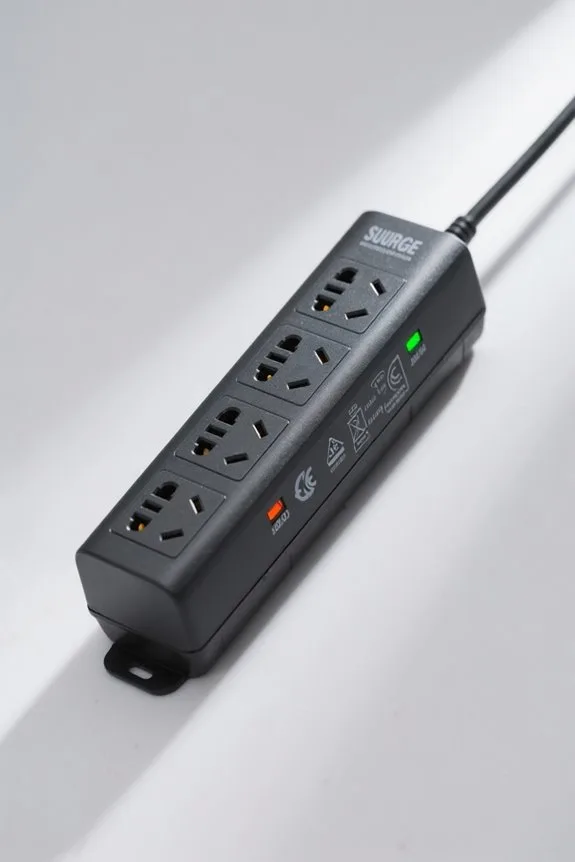
Assessing When To Upgrade Your Surge Protection at Home

A homeowner should assess surge protection by checking panel age, device failures, and outlet voltage with a multimeter (+/-3%). Install a UL1449 Type 2, 120/240 V, 50 kA panel SPD at the service. Replace MOV strips (330V clamp) on power strips every 3–5 years or after storms. Upgrade panels older than 1980 to 200 A, 120/240 V. You can hire an electrician to torque connections and verify continuity under 0.1 ohm. Further steps follow below.
Key Takeaways
- Replace surge protection if electronics fail frequently or after storms, indicating repeated surge damage.
- Upgrade when your main panel is pre-1980, rusted, or uses Federal Pacific/Zinsco components.
- Consider upgrade if you experience regular voltage flicker from AC startup or local storm activity.
- Swap protectors every 3–5 years or when their joule rating is depleted or MOVs show wear.
- Hire a licensed electrician to test panel continuity, MOV clamping, and install a whole-home Type 2 SPD.
Signs Your Home Needs Better Surge Protection
You may be interested
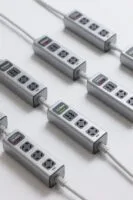
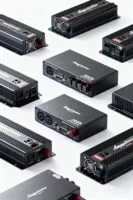
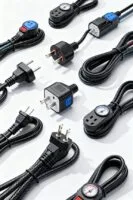
Because repeated micro-surges and humidity stress older wiring in Houston, homeowners should watch for clear electrical symptoms indicating insufficient surge protection. Signs include frequent replacement of TVs and consoles, flickering lights during AC startup, and device failure after storms. Inspect the electrical panel for units built before 1980, 120V circuits, and rust. For immediate steps, turn off main breaker (step 1), document model labels, measure outlet voltage 120.0 V ±3% with a multimeter (step 2), and record serial numbers. Recommend upgraded surge protection rated UL1449, 600V clamp, or a whole-home surge device with NEMA 1 enclosure, catalog code SPD-120G. If repeated failures occur, consult a licensed electrician to evaluate panel capacity and install a whole-home surge system. Expect installation time of 2–4 hours typically. Consider selecting devices with joule ratings between 2000–2700 for strong protection.
How Surge Protectors Work and When They Wear Out
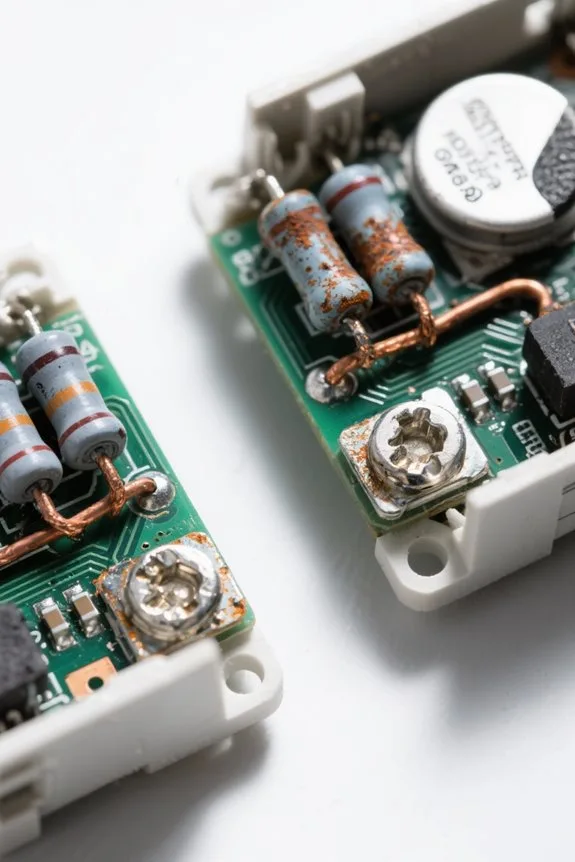
When a surge hits the line, a surge protector uses Metal Oxide Varistors (MOVs) to absorb excess voltage and redirect it to ground. The MOVs clamp voltage, rated commonly at 330V clamping and designed for 120VAC, measured in joules. Surge Protectors list total joules, 600J, 2000J, predicting lifespan. Over repeated events MOVs degrade, and when protection nears zero or the electrical system is struggling the surge protector stops protecting and functions as a power strip. Inspect models with product codes such as UL1449, or IEC 61643 markings, and watch lights while noting limits. Replace devices every 3 to 5 years, or sooner if joules used or lights indicate failure. In practice a technician can test continuity and MOV resistance with a 10 MΩ meter. For heavy setups, consider surge protectors with a higher rating such as 4320 joules for better long-term protection.
Whole-Home vs. Power-Strip Protection: Which Is Right?
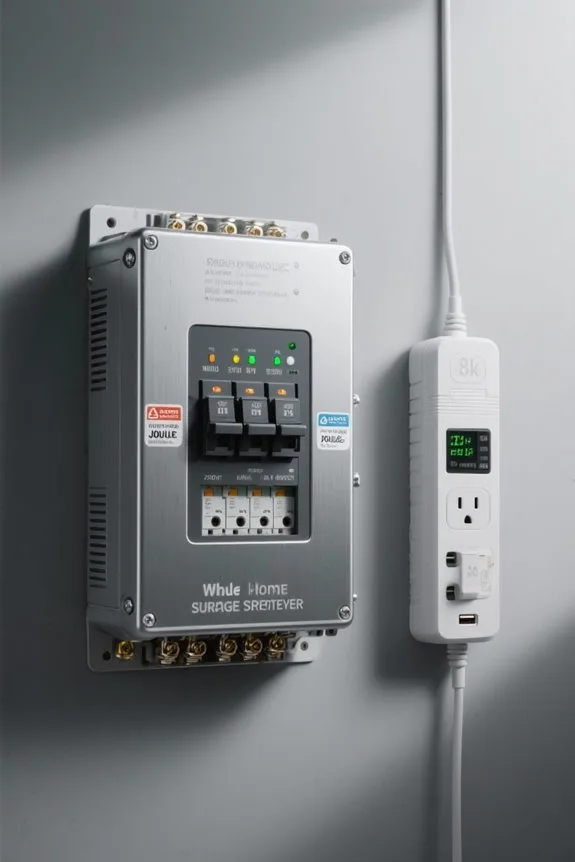
How should a homeowner choose between whole-home surge protection and a power-strip protector for a Houston house? Whole-home protection mounts at the main panel, rated 120/240V, Type 2, UL1449 SPD-2000, handling thousands joules. Power strips often list joule ratings below 1000, model PS-900 and similar, absorbing small surges only. In Houston, frequent power surges from storms and AC cycling cause cumulative damage to electronics and appliances. You can reduce risk by installing a panel-mounted unit, then adding point-of-use strips, following three steps below regularly. Step 1: shut off the main breaker; Step 2: secure SPD to a 4 in x 4 in backboard; Step 3: reconnect. Hire a licensed electrician to verify wiring, torque terminals to 35 in-lbs, and test with 3kA surge generator monthly. Also ensure associated conductors are 12 AWG or thicker to minimize voltage drop and meet installation standards 12 AWG.
When to Upgrade Your Electrical Panel Alongside Surge Protection
Assess the electrical service for signs that a panel upgrade should accompany surge protection installation. A home with an electrical panel manufactured before 1980, or labeled Federal Pacific or Zinsco, often requires replacement to handle 100–200 A, 120/240 V loads and modern electronics. Recommend a 200 A, 120/240 V panel, model Eaton BR or Square D QO, and an integrated Type 2 surge protection module (UL 1449, 3 kA minimum). Steps: verify main breaker rating, measure busbar voltage at 120/240 V, confirm available spaces for breakers, and inspect for corrosion. If no breaker spaces exist or frequent voltage spikes occur, schedule a licensed electrician to swap the panel and install surge protection per 2020 NEC requirements. Maintain documentation and sticker panel with date stamp. Also consider surge protectors with metal housings for increased resistance to impact and corrosion.
What to Expect During a Professional Surge Protection Inspection
After panel replacement recommendations, a licensed electrician will perform a surge protection inspection following 2020 NEC and UL 1449 guidelines. The electrician will first visually inspect the service panel, checking breaker torque to 20 ft-lb and bus connections for signs of overheating. Next they will test Metal Oxide Varistors (MOVs), measuring clamping voltage and leakage with a handheld meter. They will look for burn marks, melted insulation, or parts with UL 1449 Type 2 SPD labels removed. Then the wiring is tested for loose connections, measuring conductor continuity and resistance under 0.1 ohm. The inspector will note overload capacity and compare to service rating, for example 200 A main. You can expect written recommendations, including options for whole-home SPDs, model suggestions, and installation steps. They will also evaluate surge protector joule ratings to match expected transient energy levels.
Frequently Asked Questions
How Do I Know if My Surge Protector Needs Replacing?
A surge protector should be replaced when warning lights, visible damage, or multiple absorbed surges indicate failure; these good indicator signs, along with lifespan factors like age and joule depletion, show performance drops requiring replacement.
Does It Matter if You Get a 30 or 50 Amp Surge Protector?
Better safe than sorry: yes, homeowners consider surge protection differences; 50‑amp offers amperage benefits for heavy loads, supporting more devices and energy, while electrical safety requires matching protector rating to the panel to avoid hazards
How Often Should You Replace a Whole House Surge Protector?
Typically, a whole house surge protector should be replaced every three to five years; surge protector lifespan varies, so owners should monitor signs of wear, follow maintenance tips like regular inspections after storms and checks.
What Should You Never Plug Into a Surge Protector?
Homeowners should never plug high power appliances, medical equipment, computer servers, routers, or daisy-chained strips into surge protectors; sensitive electronics may require dedicated lines or different surge protector types for safety and reliability and maintenance.